
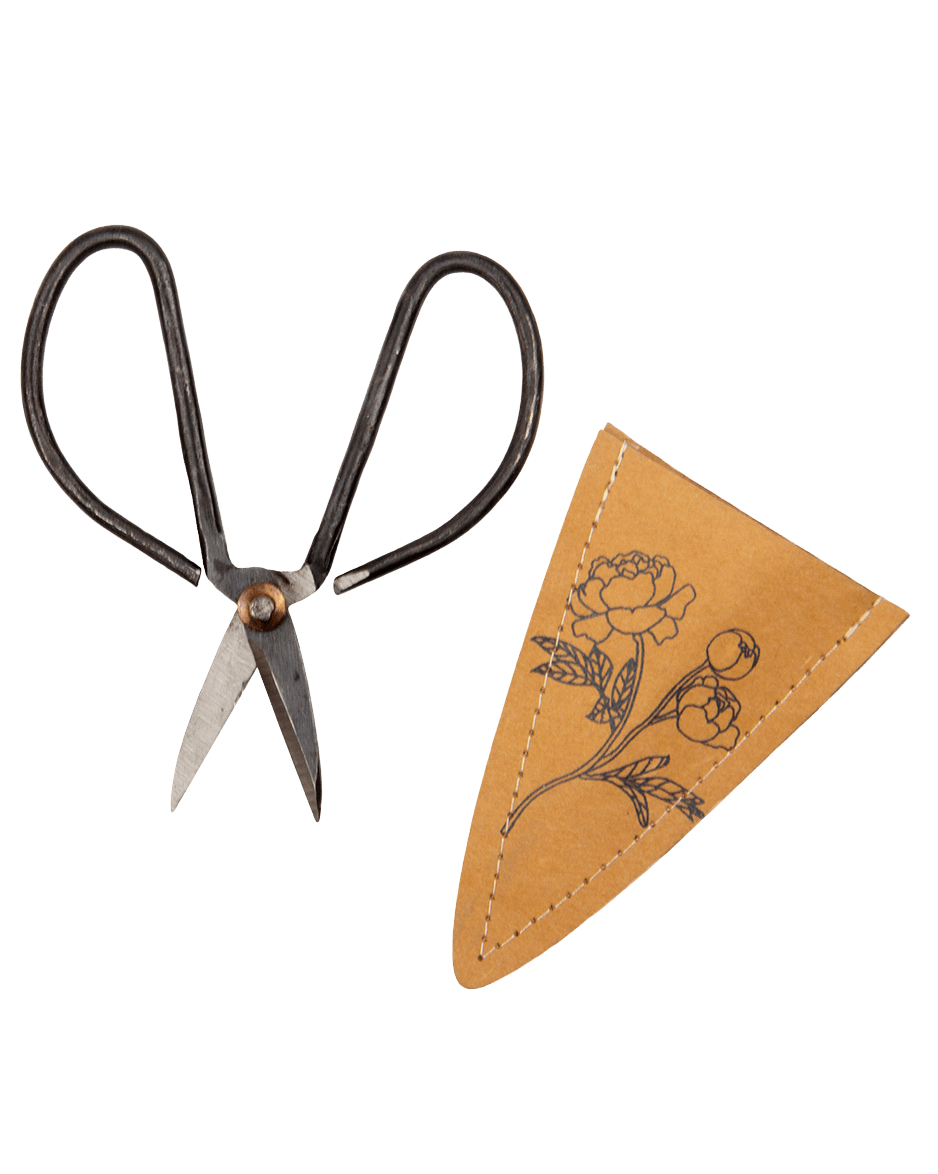
Kenzan Ikebana Floral Frogs & Dishes

Kenzan Ikebana Floral Frogs & Dishes

Give Your Flowers the Support They Deserve With Kenzan Ikebana Floral Frogs

A flower frog — called a kenzan in ikebana, the Japanese art of flower arranging — is a weighted pin holder that anchors stems upright inside a shallow dish or vase, no foam required. This collection covers metal pin frogs, ceramic ikebana dishes, glass kenzan vessels, and the clippers that finish the job.

Metal pin frogs · Ceramic ikebana dishes · Glass kenzan vessels · Reusable — no floral foam · Designed in Toronto, made by hand · Ships gift-ready to 40+ countries

A flower frog earns its permanent spot in a drawer the first time you use one. Press a stem onto the pins at the angle you want and it stays there — no tape grid, no wire, no block of floral foam shedding microplastics into the water. The Kenzan Metal set carries multiple pin sizes for everything from a single rose to a branch; the Swayzak ceramic dish gives the frog a vessel shallow enough to disappear under the arrangement. Everything here is reusable indefinitely, which is the entire argument.

The same tools serve two audiences without adjustment. If you practice ikebana, this is the equipment list: dish, kenzan, clippers, restraint. If you have never heard the word before this paragraph, a flower frog still fixes the ordinary Tuesday problem of stems slumping sideways in a vase that is slightly too wide for them. Chive has designed these pieces in the Toronto studio alongside the ceramic line — shaped by hand, built to outlast every arrangement they hold.

Kenzan
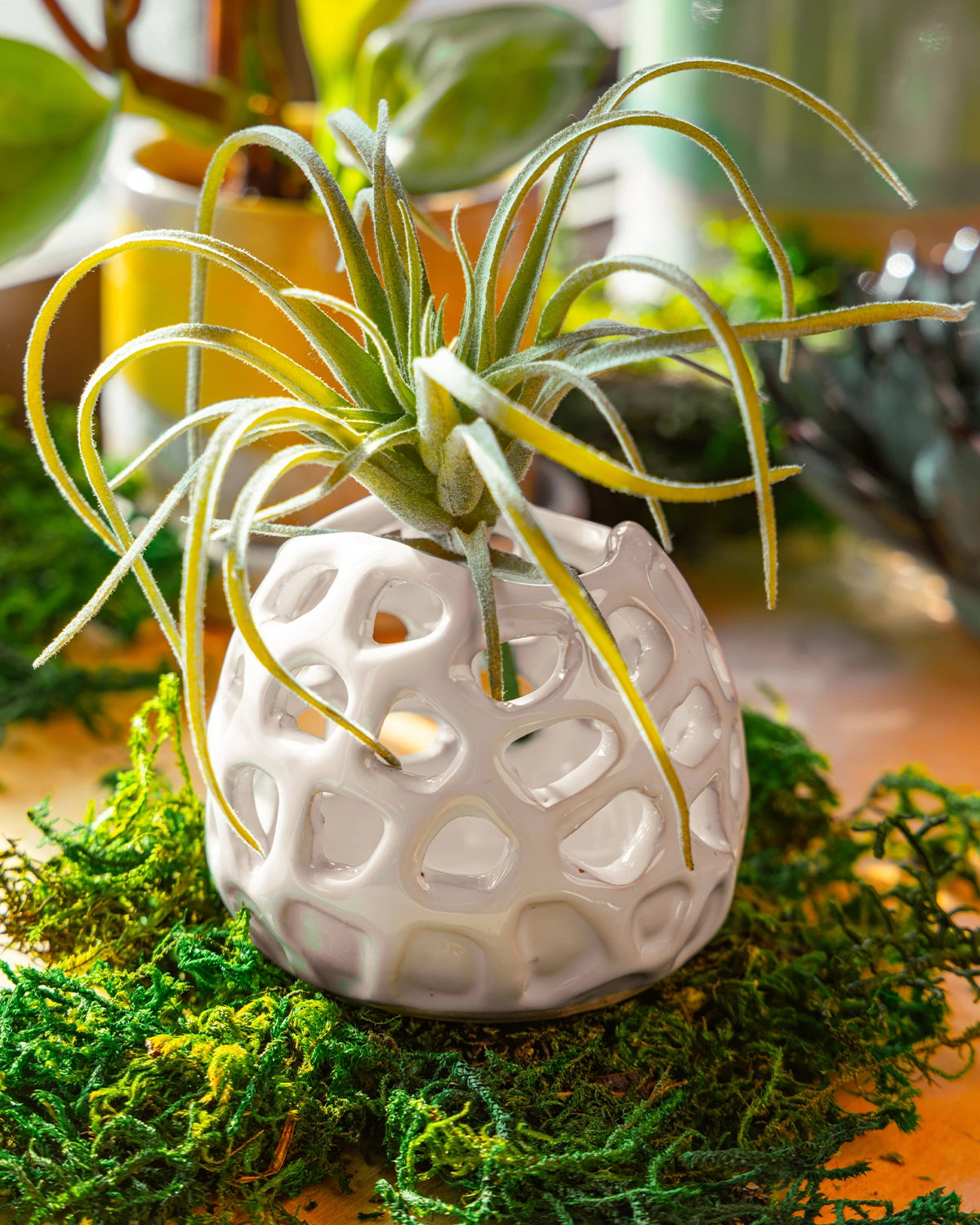
Kenzan is the Japanese name for the pin-frog: a heavy base, usually brass or steel, set with upright needles that grip each stem individually. The weight resists the torque of tall branches; the pin spacing decides how finely you can place each flower. A kenzan sits inside a shallow dish — the Swayzak in this collection was shaped for exactly that job — and disappears entirely once the arrangement is in. Choose pin coverage to match the vessel base, not the bouquet size.

Planet Moon - Gideon - handmade by Chive Studio Toronto

Ikebana Vase

An ikebana vase is shallower and wider than a Western vase because the kenzan, not the walls, holds the stems. The Neutrino glass kenzan vase in this collection builds the frog into the vessel; the ceramic dishes let you move one frog between containers. Either way the geometry is the same: a low waterline, an anchored base, and stems placed by decision rather than gravity. If you arrange flowers more than twice a year, the vase pays for itself in un-slumped mornings.

Chive Studio has designed these tools in Toronto since 2004, each piece made by hand alongside a ceramic line now carried by 200+ institutions worldwide and wholesaled to thousands of shops. Exhibiting at the RHS Chelsea Flower Show since 2013; twice awarded the 5-star booth award — only two are given each year. Everything here ships gift-ready to 40+ countries. 

Reviewed by Jessie Duenas, Chive designer · Updated August 2026

How to Use a Flower Frog: A Beginner's Guide
Jessie Duenas
A flower frog (kenzan) holds stems upright in a shallow dish — no foam, no tape, no tall vase. Press stems onto the pins, add water, and the arrangement is done. Three stems, cu...
Read more

Frequently asked questions about Kenzans

What is a flower frog and how does it hold stems in a vase?

A flower frog is a weighted holder — usually metal pins set in a heavy base — placed inside a shallow vessel to anchor flower stems upright without foam, tape, or wire. The pins grip each stem individually, which allows precise placement. This collection includes the Kenzan Metal set with multiple pin sizes. The device has been holding flowers in place for over a century. The name has been confusing people for exactly as long.

What is the difference between a flower frog and floral foam?

A flower frog is reusable metal or ceramic; floral foam is single-use synthetic material that degrades into microplastics. A flower frog holds stems by pin-grip; foam holds them by compression. The environmental difference is permanent: one lasts decades, the other lasts one arrangement and then outlasts everything else in the landfill. The choice is between a tool and a consumable. The flowers do not care. The waterway downstream does.

What size flower frog do I need for a wide mouth vase?

Match the flower frog to the vessel's base — for a wide-mouth vase, a larger kenzan frog (three inches or more across) provides enough pin coverage to support stems without them leaning to the edges. Smaller frogs work in bud vases and narrow dishes. The weight of the frog matters as much as the width: a heavy base resists the torque of tall stems. The stems push. The frog pushes back.

Can beginners use a flower frog for ikebana arrangements?

Yes — a flower frog is more forgiving than it appears. Press the stem onto the pins at the desired angle and the frog holds it there. Beginners benefit from fewer stems, not more complicated tools. Ikebana at its core is about placement, not equipment. The Kenzan Metal set in this collection includes multiple pin sizes, which gives a beginner options without requiring expertise. The pins do the holding. The eye does the arranging.

What flowers work best with a metal pin flower frog?

Stems with firm, woody, or thick bases grip metal pins best — roses, dahlias, sunflowers, and branches all seat securely. Softer stems like tulips work if cut cleanly at an angle. A flower frog accommodates most cut flowers; the technique is in the cut, not the species. Trim the stem fresh, press it straight onto the pin, and let the weight of the base do the engineering. The flower provides the beauty. The frog provides the physics.

Is a flower frog reusable or is it single use like floral foam?

A flower frog is reusable — indefinitely, which is the entire point and also the entire indictment of floral foam, a product designed to hold flowers for one event and then persist in a landfill for geological timescales, which is a longevity-to-usefulness ratio that even the most generous cost-benefit analysis cannot endorse. Rinse the frog after each arrangement, dry it, and it is ready for the next. One Chive kenzan frog outlasts years of arrangements. Floral foam outlasts the frog too, unfortunately, but in a location and context nobody prefers. The metal is permanent. The foam is also permanent. Only one of these facts is a selling point.

What is ikebana and do I need special supplies to start?

Ikebana is the Japanese art of flower arrangement — a practice focused on line, space, and balance rather than volume. To start, you need a shallow dish, a flower frog, stems, and a willingness to place fewer of them than Western instinct suggests. The Kenzan and Swayzak dish in this collection cover the equipment. The restraint you supply yourself. Ikebana teaches subtraction. Most decorating teaches addition. The flower frog holds the difference.

How do you clean a flower frog after an arrangement wilts?

Remove the spent stems, rinse the flower frog under running water, and use a stiff brush or toothpick to clear any debris from between the pins. Dry thoroughly to prevent oxidation. Stubborn residue loosens with a brief vinegar soak. The cleaning takes less time than the arrangement it held, which is the kind of maintenance ratio that rewards the tool owner handsomely for choosing reusable over disposable.

2004 Making ceramics since
200+ Institutions worldwide

RHS Chelsea Flower Show2026 4-star booth award recipient
2 x 5-star booth award — winner
Exhibiting since 2013

About Chive Studio

Chive Studio has designed ceramic wall flowers in Toronto since 2004, and the arranging tools in this collection grew up beside them. If the frog starts an arranging habit, the bud vases next door give single stems somewhere to live, the glass vases collection covers every working shape, and the plant accessories collection carries the clippers, misters, and the rest of the kit.

Learn more about Chive Studio →

Chive in the Press →·