
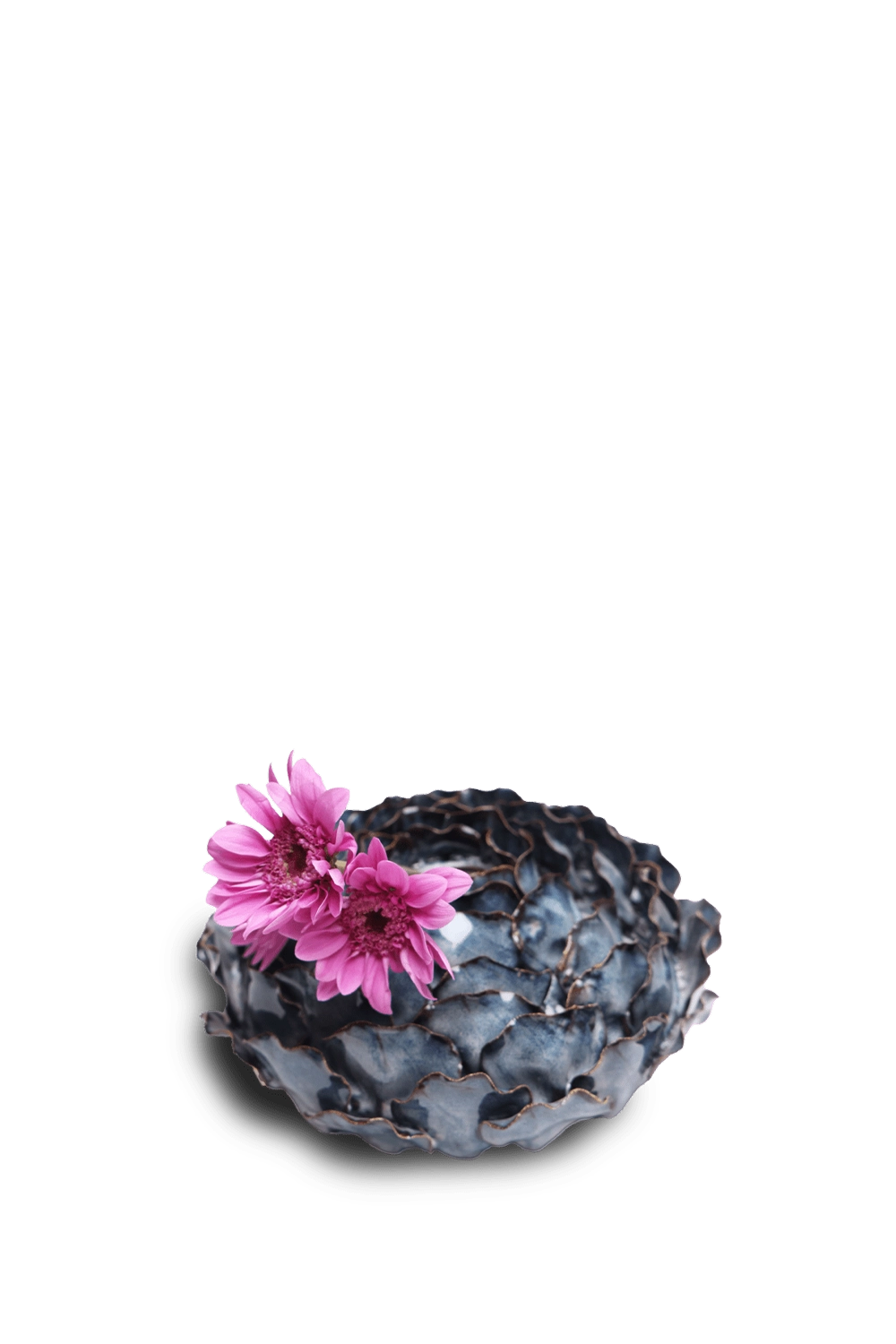
Green - Lotus - handmade by Chive Studio Toronto

Ceramic Vases

The vase stands its ground. The stems appreciate the commitment.

 A ceramic flower vase does two jobs glass can't: its weight anchors tall or top-heavy stems, and its opaque walls block the light that feeds algae in standing water. Every ceramic vase in this collection is shaped by hand and kiln-fired at the studio, glazed in small batches, no two exactly alike.

Hand-built & kiln-fired · Weighted bases for tall stems · Small-batch glazes · Designed in Toronto, made by hand · Ships gift-ready to 40+ countries
Filters
Out of stock
Color
Sort by

Ceramic earns its place in the vase conversation through physics before aesthetics. Mass at the base means a delphinium doesn't tip the vessel; opaque walls mean the water stays dark and the stems stay fresher. The collection runs from bud-scale pieces for a windowsill to sculptural forms that hold a mantel empty — porcelain birds, inkwells, geometric Juvels — each one shaped by hand, dried, glazed, and fired at temperatures that fuse the color permanently to the clay body. 

Small-batch making leaves fingerprints, figuratively and occasionally literally. Glaze depth shifts slightly between firings; rims carry the evidence of the hand that finished them. A factory vase is consistent; a studio vase is specific, and specificity is what ends up on the mantel. The ceramics have traveled with the studio to flower shows on both sides of the border, and the shows have been gracious about the luggage.
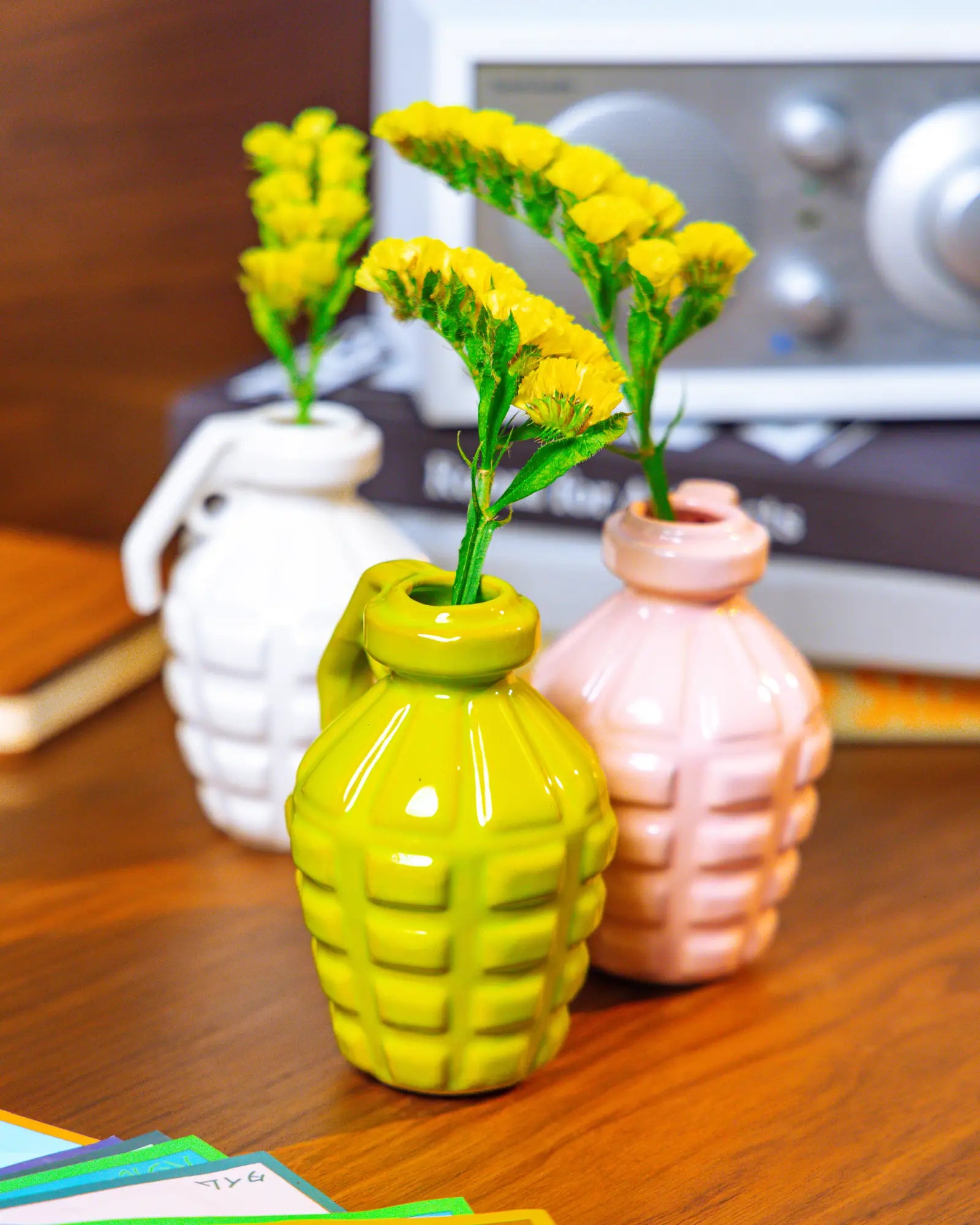
Ceramic Vases
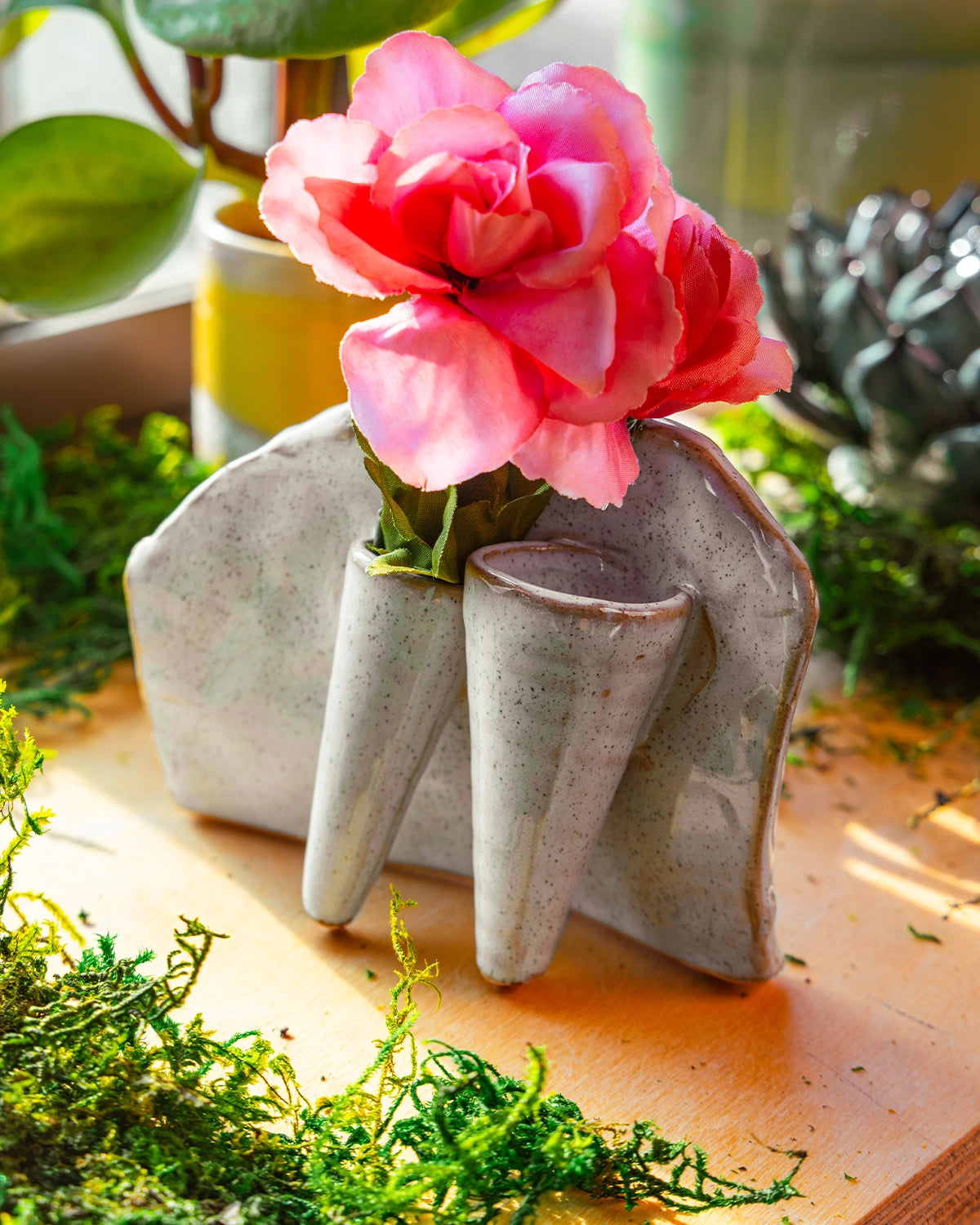
Ceramic vases divide by what they're for: weighted cylinders for tall stems, low rounded forms for garden cuts, narrow-necked pieces that make one flower look like a decision. The through-line is the making — every piece here starts as clay in the Toronto studio, gets shaped by hand, and comes out of the kiln with a glaze mixed in a batch small enough to have a birthday. Pick by the stems you actually cut, not the arrangement you theoretically plan.

White - Lotus - handmade by Chive Studio Toronto

Handmade Ceramic Vase

A handmade ceramic vase announces itself in the details mass production sands away — the faint asymmetry of a hand-finished rim, glaze that pools a shade deeper on one side, a weight that varies piece to piece because the walls were built, not extruded. None of these are defects; they are the receipt. If two vases from this collection matched perfectly, one of them would be lying.

Chive Studio has designed these ceramics in Toronto since 2004, every vase shaped by hand and kiln-fired at the studio. Chive has exhibited at the Philadelphia Flower Show six times, most recently in 2026 after a thirteen-year absence, and studio work now sits in 200+ institutions worldwide. Every piece ships gift-ready to 40+ countries.

Reviewed by Jessie Duenas, Chive designer · Updated August 2026

How to Arrange Flowers in a Bud Vase
Jessie Duenas
Bud vase arrangements follow one rule: one stem, cut at an angle, in a narrow-neck vase filled 80% with water. Strip the lower leaves, set it down, and the whole thing takes fiv...
Read more

Frequently asked questions about ceramic vases

What makes a ceramic flower vase better for stem support?

Weight — a ceramic flower vase holds more mass at the base than glass, which prevents tipping when stems are tall or top-heavy. The material also blocks light from the water, slowing algae growth and keeping stems fresher longer. Ceramic supports the arrangement from below by not moving and from within by not encouraging what grows in stagnant water. The vase stands its ground. The stems appreciate the commitment.

How are ceramic vases fired and glazed at a small studio?

Shaped, dried, glazed by hand, then fired in a kiln at temperatures that fuse the glaze permanently to the clay body — ceramic vases from a working studio go through this cycle individually rather than in a continuous factory line. The glaze colour is mixed in small batches. The firing schedule is set by the kiln operator, not a conveyor. A studio-fired vase carries the evidence of every decision made on the way to the shelf, and the shelf is better for it.

What defines a modern flower vase compared to traditional shapes?

Clean geometry, minimal decoration, and a form that serves the flower rather than competing with it — a modern flower vase tends toward cylinders, asymmetric curves, and matte or semi-gloss finishes rather than ornate patterns and heavy rims. "Modern" in vases means the vessel recedes. The flower advances. Traditional shapes announce themselves. Modern shapes introduce the arrangement and then politely leave the conversation.

Does a white ceramic vase go with every flower color?

Yes — a white ceramic vase functions as a neutral ground that makes every stem colour register more vividly against it. Bright flowers pop. Soft tones glow. Greens read as deliberate. White does not compete with the arrangement; it frames it the way a gallery wall frames a painting. The vase is the background. The flower is the foreground. White understood the assignment before the flower arrived.

What counts as a unique flower vase worth displaying empty?

A unique flower vase worth displaying empty is one whose shape, glaze, or form has enough visual interest to hold a shelf without flowers, without apology, and without the faintly accusatory air of a container that is clearly waiting for someone to fill it and wondering, with increasing volume, why nobody has bothered. The pieces in this collection are designed to work both ways — full is the intended state, but empty is not a failure. It is a rest. Some of these ceramics look better empty than they do with flowers, which the studio regards as either a compliment to the potter or an indictment of the gardener. We have chosen not to investigate which.

How do pottery vases differ from mass-produced ceramic pieces?

A pottery vase from a small studio is shaped, glazed, and fired with individual attention at every stage — pottery vases carry slight variations in glaze depth, rim shape, and weight that mass production eliminates by design. The variation is evidence of the human hand, not a defect in the output. A factory piece is consistent. A studio piece is specific. Consistency is admirable. Specificity is what people actually put on the mantel.

Where should a small ceramic vase sit in a room?

On the surface that needs one small thing — a nightstand, a bathroom shelf, a kitchen windowsill, the narrow ledge above a radiator. A small ceramic vase earns its position by occupying the spots larger arrangements cannot reach. One stem, one vessel, one surface that was empty until it was not. Small vases solve small spaces, which are the spaces that tend to be forgotten first and noticed most once they are filled.

What makes a cute vase feel playful without looking cluttered?

Scale and specificity — a cute vase avoids clutter when the shape is small, the detail is deliberate, and the placement has one clear surface to call home. This collection includes character-driven and coloured ceramics that earn a shelf without overwhelming it. One playful piece reads as personality. Three reads as a decision. Seven reads as a lifestyle. The shelf decides how many it can absorb. The vase decides whether it was worth the space. The answer should be immediate.

2004 Making ceramics since
200+ Institutions worldwide

RHS Chelsea Flower Show2026 4-star booth award recipient
2 x 5-star booth award — winner
Exhibiting since 2013

About Chive Studio

Chive Studio has designed ceramic wall flowers in Toronto since 2004; these vases come out of the same kilns. The full vases hub compares every shape side by side, the glass vases collection is this page's transparent counterpart, and the bud vases system handles single stems by the tube.

Learn more about Chive Studio →

Chive in the Press →