This is the second part of the new evaluation of atomic masses, AME2020. Using least-squares adjustments to all evaluated and accepted experimental data, described in Part I, we derived tables with numerical values and graphs which supersede those given in AME2016. The first table presents the recommended atomic mass values and their uncertainties. It is followed by a table of the influences of data on primary nuclides, a table of various reaction and decay energies, and finally, a series of graphs of separation and decay energies. The last section of this paper provides all input data references that were used in the AME2020 and the NUBASE2020 evaluations.
ISSN: 2058-6132
Chinese Physics C covers research into the theory and experiment of particle physics, nuclear physics, particle and nuclear astrophysics, and cosmology.
Median time to first decision24 days
Impact factor3.1
Citescore6.9
The following article is Open access
The AME 2020 atomic mass evaluation (II). Tables, graphs and referencesMeng Wang et al 2021 Chinese Phys. C 45 030003
The following article is Open access
The NUBASE2020 evaluation of nuclear physics propertiesF.G. Kondev et al 2021 Chinese Phys. C 45 030001
View article, The NUBASE2020 evaluation of nuclear physics propertiesPDF, The NUBASE2020 evaluation of nuclear physics properties
The NUBASE2020 evaluation contains the recommended values of the main nuclear physics properties for all nuclei in their ground and excited, isomeric (T1/2 100 ns) states. It encompasses all experimental data published in primary (journal articles) and secondary (mainly laboratory reports and conference proceedings) references, together with the corresponding bibliographical information. In cases where no experimental data were available for a particular nuclide, trends in the behavior of specific properties in neighboring nuclei were examined and estimated values are proposed. Evaluation procedures and policies that were used during the development of this evaluated nuclear data library are presented, together with a detailed table of recommended values and their uncertainties.
The following article is Open access
The AME 2020 atomic mass evaluation (I). Evaluation of input data, and adjustment proceduresW.J. Huang et al 2021 Chinese Phys. C 45 030002
View article, The AME 2020 atomic mass evaluation (I). Evaluation of input data, and adjustment proceduresPDF, The AME 2020 atomic mass evaluation (I). Evaluation of input data, and adjustment procedures
This is the first of two articles (Part I and Part II) that presents the results of the new atomic mass evaluation, AME2020. It includes complete information on the experimental input data that were used to derive the tables of recommended values which are given in Part II. This article describes the evaluation philosophy and procedures that were implemented in the selection of specific nuclear reaction, decay and mass-spectrometric data which were used in a least-squares fit adjustment in order to determine the recommended mass values and their uncertainties. All input data, including both the accepted and rejected ones, are tabulated and compared with the adjusted values obtained from the least-squares fit analysis. Differences with the previous AME2016 evaluation are discussed and specific examples are presented for several nuclides that may be of interest to AME users.
The following article is Open access
Sub-percent precision measurement of neutrino oscillation parameters with JUNOAngel Abusleme et al 2022 Chinese Phys. C 46 123001
View article, Sub-percent precision measurement of neutrino oscillation parameters with JUNOPDF, Sub-percent precision measurement of neutrino oscillation parameters with JUNO
JUNO is a multi-purpose neutrino observatory under construction in the south of China. This publication presents new sensitivity estimates for the measurement of the  ,
,  ,
,  , and
, and  oscillation parameters using reactor antineutrinos, which is one of the primary physics goals of the experiment. The sensitivities are obtained using the best knowledge available to date on the location and overburden of the experimental site, the nuclear reactors in the surrounding area and beyond, the detector response uncertainties, and the reactor antineutrino spectral shape constraints expected from the TAO satellite detector. It is found that the
  and
and  oscillation parameters will be determined to 0.5% precision or better in six years of data collection. In the same period, the
  parameter will be determined to about
  % precision for each mass ordering hypothesis. The new precision represents approximately an order of magnitude improvement over existing constraints for these three parameters.
The following article is Open access
New physics search at the CEPC: a general perspectiveXiaocong Ai et al 2025 Chinese Phys. C 49 123108
The following article is Open access
Prediction of energy resolution in the JUNO experimentAngel Abusleme et al 2025 Chinese Phys. C 49 013003
View article, Prediction of energy resolution in the JUNO experimentPDF, Prediction of energy resolution in the JUNO experiment
This paper presents an energy resolution study of the JUNO experiment, incorporating the latest knowledge acquired during the detector construction phase. The determination of neutrino mass ordering in JUNO requires an exceptional energy resolution better than 3% at 1 MeV. To achieve this ambitious goal, significant efforts have been undertaken in the design and production of the key components of the JUNO detector. Various factors affecting the detection of inverse beta decay signals have an impact on the energy resolution, extending beyond the statistical fluctuations of the detected number of photons, such as the properties of the liquid scintillator, performance of photomultiplier tubes, and the energy reconstruction algorithm. To account for these effects, a full JUNO simulation and reconstruction approach is employed. This enables the modeling of all relevant effects and the evaluation of associated inputs to accurately estimate the energy resolution. The results of this study reveal an energy resolution of 2.95% at 1 MeV. Furthermore, this study assesses the contribution of major effects to the overall energy resolution budget. This analysis serves as a reference for interpreting future measurements of energy resolution during JUNO data collection. Moreover, it provides a guideline for comprehending the energy resolution characteristics of liquid scintillator-based detectors.
The following article is Open access
Flavor physics at the CEPC: a general perspectiveXiaocong Ai et al 2025 Chinese Phys. C 49 103003
View article, Flavor physics at the CEPC: a general perspectivePDF, Flavor physics at the CEPC: a general perspective
We discuss the landscape of flavor physics at the Circular Electron-Positron Collider (CEPC), based on the nominal luminosity outlined in its Technical Design Report. The CEPC is designed to operate in multiple modes to address a variety of tasks. At the Z pole, the expected production of 4 Tera Z bosons will provide unique and highly precise measurements of Z boson couplings, while the substantial number of boosted heavy-flavored quarks and leptons produced in clean Z decays will facilitate investigations into their flavor physics with unprecedented precision. We investigate the prospects of measuring various physics benchmarks and discuss their implications for particle theories and phenomenological models. Our studies indicate that, with its highlighted advantages and anticipated excellent detector performance, the CEPC can explore beauty and τ physics in ways that are superior to or complementary with the Belle II and Large-Hadron-Collider-beauty experiments, potentially enabling the detection of new physics at energy scales of 10 TeV and above. This potential also extends to the observation of yet-to-be-discovered rare and exotic processes, as well as testing fundamental principles such as lepton flavor universality, lepton and baryon number conservation, etc., making the CEPC a vibrant platform for flavor physics research. The WW threshold scan, Higgs-factory operation and top-pair productions of the CEPC further enhance its merits in this regard, especially for measuring the Cabibbo-Kobayashi-Maskawa matrix elements, and Flavor-Changing-Neutral-Current physics of Higgs boson and top quarks. We outline the requirements for detector performance and considerations for future development to achieve the anticipated scientific goals. The role of machine learning for innovative detector design and advanced reconstruction algorithms is also stressed. The CEPC flavor physics program not only develops new capabilities for exploring flavor physics beyond existing projects but also enriches the physics opportunities of this machine. It should be remarked that, given the richness of the CEPC flavor physics, this manuscript is not meant to be a comprehensive survey, but rather an investigation of representative cases. Uncovering the full potential of flavor physics at the CEPC will require further dedicated explorations in the future.
The following article is Open access
Potential to identify neutrino mass ordering with reactor antineutrinos at JUNOAngel Abusleme et al 2025 Chinese Phys. C 49 033104
View article, Potential to identify neutrino mass ordering with reactor antineutrinos at JUNOPDF, Potential to identify neutrino mass ordering with reactor antineutrinos at JUNO
The Jiangmen Underground Neutrino Observatory (JUNO) is a multi-purpose neutrino experiment under construction in South China. This paper presents an updated estimate of JUNO’s sensitivity to neutrino mass ordering using the reactor antineutrinos emitted from eight nuclear reactor cores in the Taishan and Yangjiang nuclear power plants. This measurement is planned by studying the fine interference pattern caused by quasi-vacuum oscillations in the oscillated antineutrino spectrum at a baseline of 52.5 km and is completely independent of the CP violating phase and neutrino mixing angle θ23. The sensitivity is obtained through a joint analysis of JUNO and Taishan Antineutrino Observatory (TAO) detectors utilizing the best available knowledge to date about the location and overburden of the JUNO experimental site, local and global nuclear reactors, JUNO and TAO detector responses, expected event rates and spectra of signals and backgrounds, and systematic uncertainties of analysis inputs. We find that a 3σ median sensitivity to reject the wrong mass ordering hypothesis can be reached with an exposure of about 6.5 years × 26.6 GW thermal power.
The following article is Open access
Future Physics Programme of BESIIIM. Ablikim et al 2020 Chinese Phys. C 44 040001
There has recently been a dramatic renewal of interest in hadron spectroscopy and charm physics. This renaissance has been driven in part by the discovery of a plethora of charmonium-like XYZ states at BESIII and B factories, and the observation of an intriguing proton-antiproton threshold enhancement and the possibly related X(1835) meson state at BESIII, as well as the threshold measurements of charm mesons and charm baryons.
We present a detailed survey of the important topics in tau-charm physics and hadron physics that can be further explored at BESIII during the remaining operation period of BEPCII. This survey will help in the optimization of the data-taking plan over the coming years, and provides physics motivation for the possible upgrade of BEPCII to higher luminosity.
The following article is Open access
Chapter 1 LHAASO Instruments and Detector technologyXin-Hua Ma et al 2022 Chinese Phys. C 46 030001
View article, Chapter 1 LHAASO Instruments and Detector technologyPDF, Chapter 1 LHAASO Instruments and Detector technology
The Large High Altitude Air Shower Observatory (LHAASO) (Fig. 1) is located at Mt. Haizi (4410 m a.s.l., 600 g/cm2, 29° 21’ 27.56” N, 100° 08’ 19.66” E) in Daocheng, Sichuan province, P.R. China. LHAASO consists of 1.3 km2 array (KM2A) of electromagnetic particle detectors (ED) and muon detectors (MD), a water Cherenkov detector array (WCDA) with a total active area of 78,000 m2, 18 wide field-of-view air Cherenkov telescopes (WFCTA) and a newly proposed electron-neutron detector array (ENDA) covering 10,000 m2. Each detector is synchronized with all the other through a clock synchronization network based on the White Rabbit protocol. The observatory includes an IT center which comprises the data acquisition system and trigger system, the data analysis facility. In this Chapter, all the above-mentioned components of LHAASO as well as infrastructure are described.
Erratum: Layout optimization and performance analysis of large array of imaging atmospheric Cherenkov telescopes [Chin. Phys. C 49, 035001 (2025)]
Zhipeng Zhang et al 2026 Chinese Phys. C 50 059002
View article, Erratum: Layout optimization and performance analysis of large array of imaging atmospheric Cherenkov telescopes [Chin. Phys. C 49, 035001 (2025)]PDF, Erratum: Layout optimization and performance analysis of large array of imaging atmospheric Cherenkov telescopes [Chin. Phys. C 49, 035001 (2025)]
In-medium NN → N∆ cross sections from constrained relativistic mean field models
Ying Cui et al 2026 Chinese Phys. C 50 054101
View article, In-medium NN → N∆ cross sections from constrained relativistic mean field modelsPDF, In-medium NN → N∆ cross sections from constrained relativistic mean field models
The theoretical prediction on the in-medium  cross sections based on a one-boson exchange model involves significant parameter uncertainties. In this work, we reduce these uncertainties by employing relativistic mean field models constrained by neutron star observations. Specifically, the range of the correction factors
  is significantly narrowed at nuclear densities above saturation.
Influence of the fission yield distribution on the nucleosynthesis in the r-process induced by neutron-star mergers
Bowen Jiang et al 2026 Chinese Phys. C 50 054103
View article, Influence of the fission yield distribution on the nucleosynthesis in the r-process induced by neutron-star mergersPDF, Influence of the fission yield distribution on the nucleosynthesis in the r-process induced by neutron-star mergers
We investigate the role of nuclear fission fragment yield distributions in shaping r-process nucleosynthesis within the low-entropy environment of neutron-star-merger ejecta. Our results demonstrate that post-freeze-out fission fragment yields play a critical role in determining the abundance pattern of the second r-process peak and its right shoulder ( ), even though most fission cycles occur before the r-process freeze-out. This study employs the semi-empirical General Fission (GEF) model to systematically characterize fission properties.
Collective states, single-particle states, and ''stapler'' mechanism in 117In
Hong-Fei Bai et al 2026 Chinese Phys. C 50 054001
View article, Collective states, single-particle states, and ''stapler'' mechanism in 117InPDF, Collective states, single-particle states, and ''stapler'' mechanism in 117In
High-spin states of 117In are studied through the incomplete fusion reaction induced by 7Li with 116Cd. A total of 19 new levels and 22 new transitions are observed. A pair of signature partner bands with the  configuration is identified. The single-particle states are described through shell-model calculations. The dipole band with the configuration of
 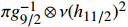 is proposed as a ''stapler'' band based on the calculations of tilted axis cranking covariant density functional theory. The ''stapler'' mechanism in In isotopes is systematically investigated. The present study reveals the diversity of excitation modes in 117In.
The following article is Open access
The forward-backward asymmetry induced CP asymmetry in Jian-Yu Yang et al 2026 Chinese Phys. C 50 053102
View article, The forward-backward asymmetry induced CP asymmetry in in phase space around the resonances andPDF, The forward-backward asymmetry induced CP asymmetry in in phase space around the resonances and
The interference between amplitudes corresponding to different intermediate resonances plays an important role in generating large CP asymmetries in the phase space in multi-body decays of bottom and charmed mesons. In this study, we examine the CP violation in the decay channel 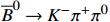 in the phase-space region where the intermediate resonances
  and
and  dominate. In particular, the forward-backward asymmetry (FBA) and the CP asymmetry induced by FBA (FB-CPA), which are closely related to the interference effects between the two aforementioned resonances, are investigated. The nontrivial correlation between FBA and FB-CPA is analyzed. The analysis indicates that FB-CPAs around the resonance
  can be as large as approximately 35%, which can be potentially accessible by Belle and Belle-II collaborations in the near future.
The following article is Open access
Probing decoupled Throats of AdS$_{D}$ Black Holes in $D=6,7$Bu et al
View accepted manuscript, Probing decoupled Throats of AdS$_{D}$ Black Holes in $D=6,7$PDF, Probing decoupled Throats of AdS$_{D}$ Black Holes in $D=6,7$
The Kerr/CFT correspondence establishes a relationship between extremal black holes in higher dimensions and a chiral conformal field theory (CFT) in their near-horizon limit. 
A generalization of this framework, known as the EVH/CFT correspondence, has been developed for four- and five-dimensional AdS black holes. 
It was further proposed in arXiv:1910.14293 that a generalized duality between $(D-2)$-dimensional geometry and $(D-3)$-dimensional field theory may emerge in AdS$_{D=6,7}$ black holes under a suitably defined extremal vanishing horizon (EVH) limit. In this work, we demonstrate that the near-EVH geometries arising in these AdS$_{6,7}$ black hole models, under the EVH limit, reduce to lower-dimensional black hole solutions whose metrics are conformally related to configurations of Einstein-Maxwell-Maxwell-dilaton (EMMD) gravity. This structural resemblance suggests a potential route toward a microscopic counting of non-AdS black hole entropy via higher-dimensional AdS/CFT techniques. Content from this work may be used under the terms of the Creative Commons Attribution 3.0 licence. Any further distribution of this work must maintain attribution to the author(s) and the title of the work, journal citation and DOI. Article funded by SCOAP3 and published under licence by Chinese Physical Society and the Institute of High Energy Physics of the Chinese Academy of Science and the Institute of Modern Physics of the Chinese Academy of Sciences and IOP Publishing Ltd.
Circular orbits and observational features of the rotating Simpson-Visser black hole surrounded by a thin accretion disk
Li et al
View accepted manuscript, Circular orbits and observational features of the rotating Simpson-Visser black hole surrounded by a thin accretion diskPDF, Circular orbits and observational features of the rotating Simpson-Visser black hole surrounded by a thin accretion disk
Since the Event Horizon Telescope (EHT) collaboration released horizon-scale images of the supermassive black holes Sgr~A* and M87*, a new observational window for probing black hole spacetimes in the strong-gravity regime has opened. As an important class of Kerr black hole mimickers, rotating Simpson-Visser (SV) black holes exhibit a degeneracy with Kerr black holes at the level of shadow size, making it difficult to distinguish them using shadow observations alone.Motivated by this issue, we present a systematic investigation of the radiative properties and optical appearance of rotating SV black holes surrounded by a thin accretion disks, and mainly analyze the influence of the regularization parameter $g$ on related observables. The results show that although the kinetic quantities and the location of the innermost stable circular orbit (ISCO) depend on the regularization parameter $g$, the radiative efficiency of the rotating SV black hole is the same as its Kerr counterpart. Within the Novikov-Thorne thin-disk model, the radiative flux, effective temperature, and spectral luminosity are studied, and by adopting observational parameters relevant to Sgr~A* and M87*, concrete examples of the rotating SV black holes are calculated and compared with that of the Kerr black holes. The results show that the parameter $g$ suppresses the maximum values of these quantities. In addition, using a backward ray-tracing technique, we numerically simulate the optical appearance of rotating SV black holes and analyze the corresponding intensity images,
redshift and observed flux distributions. Our results show that these quantities are affected by $g$. In particular, as $g$ increases, the observed intensity is significantly suppressed and the photon ring region has remarkable increase in its width. Our findings suggest that accretion-disk-related observables may provide important avenues to distinguish rotating SV black holes and Kerr black holes, and offer theoretical guidance for future high-resolution observations.
Research on the Contribution of s-process to the Abundance of 94Mo*
DONG et al
View accepted manuscript, Research on the Contribution of s-process to the Abundance of 94Mo*PDF, Research on the Contribution of s-process to the Abundance of 94Mo*
This paper addresses a long-standing problem in astrophysics—the origin of the solar system abundance of the
proton-rich isotope 94Mo by proposing a valuable novel mechanism. The main contribution of this work is that it
challenges the traditional view of ”94Mo as a pure p-process nuclide”. For the first time, it demonstrates that within
the s-process environment of low-mass AGB stars, a new s-process path (93Zr→ 93Nb →94 Nb→94Mo) for producing
94Mo can be opened, enabled by the significant enhancement of the effective decay rates of 93Zr and 94Nb due to
the high-temperature astrophysical environment. The results show that this s-process channel can contribute up to
a maximum of approximately 10.6% to the abundance of 94Mo. This work provides a new s-process perspective on
the origin of 94Mo and has implications for reevaluating the sources of other ”shielded” p-nuclei.
Determination of the Fission-Cycling Onset in the r-Process
Ma et al
View accepted manuscript, Determination of the Fission-Cycling Onset in the r-ProcessPDF, Determination of the Fission-Cycling Onset in the r-Process
Identifying the thermodynamic conditions that mark the onset of fission 
cycling is crucial for modeling heavy-element production in the r-process. 
In this work, we develop a framework to determine the onset of fission 
cycling across the $(T_9, n_n)$ plane. We define a heavy-region condition 
band near $N \approx 184$ and construct an equilibrium path band based on 
the effective neutron separation energy $S_n^{0}(T_9, n_n)$. 
We then compare the lifetimes of neutron-induced fission and $\beta$-decay 
for nuclei with $94 \le Z \le 106$. 
Within this framework, we construct a continuous map of actinide nuclei 
along the equilibrium path band, identifying where neutron-induced fission 
first overtakes $\beta$-decay. 
We find that, with increasing temperature and neutron density, the onset 
shifts toward nuclei with lower proton number ($Z$) and smaller mass number 
($A$), evolving from the Es-Cf region to the Am region. 
These results provide a quantitative benchmark for identifying the conditions 
under which fission cycling occurs in heavy r-process environments.
The atomic nucleus as a bound system of 3A quarks
Kosyakov et al
View accepted manuscript, The atomic nucleus as a bound system of 3A quarksPDF, The atomic nucleus as a bound system of 3A quarks
The atomic nucleus, conceived as a system of bound quarks, should in principle arise in an effective theory to low-energy quantum chromodynamics. This paper is an overview of recently developed models that embody essential features of the desired effective theory. The Fermi gas model enables us to understand why the number of d quarks is approximately equal to the number of u quarks in stable light nuclei up to Ca-40. A modified bag model explains the reason for the deviation from this rule in heavier nuclei. Using this model, the static properties of a wide range of stable nuclei can be described with reasonable accuracy. To get the most out of the modified bag model, it is well to resort to gauge/gravity duality. A refined version of duality states: ``The dynamical affair inside an extremal black hole located in AdS_5 is mapped onto the corresponding affair of a stable subnuclear system living in R_{1,3}''. This version of duality opens the way to predict the main decay channel of the lightest glueball. Another implication is that it explains why the periodic table contains a limited number of stable elements. Duality makes it possible to calculate the maximum allowable charge Z_{max} of stable heavy nuclei: Z_{max} = 82, which is the charge of the Pb-208 nucleus.
The following article is Open access
The AME 2020 atomic mass evaluation (II). Tables, graphs and referencesMeng Wang et al 2021 Chinese Phys. C 45 030003
View article, The AME 2020 atomic mass evaluation (II). Tables, graphs and referencesPDF, The AME 2020 atomic mass evaluation (II). Tables, graphs and references
This is the second part of the new evaluation of atomic masses, AME2020. Using least-squares adjustments to all evaluated and accepted experimental data, described in Part I, we derived tables with numerical values and graphs which supersede those given in AME2016. The first table presents the recommended atomic mass values and their uncertainties. It is followed by a table of the influences of data on primary nuclides, a table of various reaction and decay energies, and finally, a series of graphs of separation and decay energies. The last section of this paper provides all input data references that were used in the AME2020 and the NUBASE2020 evaluations.
The following article is Open access
The NUBASE2020 evaluation of nuclear physics propertiesF.G. Kondev et al 2021 Chinese Phys. C 45 030001
View article, The NUBASE2020 evaluation of nuclear physics propertiesPDF, The NUBASE2020 evaluation of nuclear physics properties
The NUBASE2020 evaluation contains the recommended values of the main nuclear physics properties for all nuclei in their ground and excited, isomeric (T1/2100 ns) states. It encompasses all experimental data published in primary (journal articles) and secondary (mainly laboratory reports and conference proceedings) references, together with the corresponding bibliographical information. In cases where no experimental data were available for a particular nuclide, trends in the behavior of specific properties in neighboring nuclei were examined and estimated values are proposed. Evaluation procedures and policies that were used during the development of this evaluated nuclear data library are presented, together with a detailed table of recommended values and their uncertainties.
The following article is Open access
The AME 2020 atomic mass evaluation (I). Evaluation of input data, and adjustment proceduresW.J. Huang et al 2021 Chinese Phys. C 45 030002
View article, The AME 2020 atomic mass evaluation (I). Evaluation of input data, and adjustment proceduresPDF, The AME 2020 atomic mass evaluation (I). Evaluation of input data, and adjustment procedures
This is the first of two articles (Part I and Part II) that presents the results of the new atomic mass evaluation, AME2020. It includes complete information on the experimental input data that were used to derive the tables of recommended values which are given in Part II. This article describes the evaluation philosophy and procedures that were implemented in the selection of specific nuclear reaction, decay and mass-spectrometric data which were used in a least-squares fit adjustment in order to determine the recommended mass values and their uncertainties. All input data, including both the accepted and rejected ones, are tabulated and compared with the adjusted values obtained from the least-squares fit analysis. Differences with the previous AME2016 evaluation are discussed and specific examples are presented for several nuclides that may be of interest to AME users.
The following article is Open access
Future Physics Programme of BESIIIM. Ablikim et al 2020 Chinese Phys. C 44 040001
There has recently been a dramatic renewal of interest in hadron spectroscopy and charm physics. This renaissance has been driven in part by the discovery of a plethora of charmonium-like XYZ states at BESIII and B factories, and the observation of an intriguing proton-antiproton threshold enhancement and the possibly related X(1835) meson state at BESIII, as well as the threshold measurements of charm mesons and charm baryons.
We present a detailed survey of the important topics in tau-charm physics and hadron physics that can be further explored at BESIII during the remaining operation period of BEPCII. This survey will help in the optimization of the data-taking plan over the coming years, and provides physics motivation for the possible upgrade of BEPCII to higher luminosity.
Event generators at BESIII
Ping Rong-Gang 2008 Chinese Phys. C 32 599
We present a brief remark and introduction to event generators for tau-charm physics currently used at BESIII, including KKMC, BesEvtGen, Bhlumi, Bhwide, Babayaga and inclusive Monte-Carlo event generators. This paper provides basic information on event generators for BESIII users.
The AME2016 atomic mass evaluation (II). Tables, graphs and references
Wang Meng et al 2017 Chinese Phys. C 41 030003
View article, The AME2016 atomic mass evaluation (II). Tables, graphs and referencesPDF, The AME2016 atomic mass evaluation (II). Tables, graphs and references
This paper is the second part of the new evaluation of atomic masses, AME2016. Using least-squares adjustments to all evaluated and accepted experimental data, described in Part I, we derive tables with numerical values and graphs to replace those given in AME2012. The first table lists the recommended atomic mass values and their uncertainties. It is followed by a table of the influences of data on primary nuclides, a table of various reaction and decay energies, and finally, a series of graphs of separation and decay energies. The last section of this paper lists all references of the input data used in the AME2016 and the NUBASE2016 evaluations (first paper in this issue).
AMDC: http://amdc.impcas.ac.cn/
| Contents | |
| The AME2016 atomic mass evaluation (II). Tables, graphs and references | Acrobat PDF (293 KB) |
| Table I. The 2016 Atomic mass table | Acrobat PDF (273 KB) |
| Table II. Influences on primary nuclides | Acrobat PDF (160 KB) |
| Table III. Nuclear-reaction and separation energies | Acrobat PDF (517 KB) |
| Graphs of separation and decay energies | Acrobat PDF (589 KB) |
| References used in the AME2016 and the NUBASE2016 evaluations | Acrobat PDF (722 KB) |
Review of Particle Physics
K.A. Olive 2014 Chinese Phys. C 38 090001
The Review summarizes much of particle physics and cosmology. Using data from previous editions, plus 3,283 new measurements from 899 papers, we list, evaluate, and average measured properties of gauge bosons and the recently discovered Higgs boson, leptons, quarks, mesons, and baryons. We summarize searches for hypothetical particles such as heavy neutrinos, supersymmetric and technicolor particles, axions, dark photons, etc. All the particle properties and search limits are listed in Summary Tables. We also give numerous tables, figures, formulae, and reviews of topics such as Supersymmetry, Extra Dimensions, Particle Detectors, Probability, and Statistics. Among the 112 reviews are many that are new or heavily revised including those on: Dark Energy, Higgs Boson Physics, Electroweak Model, Neutrino Cross Section Measurements, Monte Carlo Neutrino Generators, Top Quark, Dark Matter, Dynamical Electroweak Symmetry Breaking, Accelerator Physics of Colliders, High-Energy Collider Parameters, Big Bang Nucleosynthesis, Astrophysical Constants and Cosmological Parameters.
All tables, listings, and reviews (and errata) are also available on the Particle Data Group website: http://pdg.lbl.gov.
| Contents | |
| Abstract, Contributors, Highlights and Table of Contents | Acrobat PDF (4.4 MB) |
| Introduction | Acrobat PDF (595 KB) |
| Particle Physics Summary Tables | |
| Gauge and Higgs bosons | Acrobat PDF (204 KB) |
| Leptons | Acrobat PDF (167 KB) |
| Quarks | Acrobat PDF (115 KB) |
| Mesons | Acrobat PDF (976 KB) |
| Baryons | Acrobat PDF (384 KB) |
| Searches (Supersymmetry, Compositeness, etc.) | Acrobat PDF (120 KB) |
| Tests of conservation laws | Acrobat PDF (383 KB) |
| Reviews, Tables, and Plots | |
| Detailed contents for this section | Acrobat PDF (73 KB) |
| Constants, Units, Atomic and Nuclear Properties | Acrobat PDF (395 KB) |
| Standard Model and Related Topics | Acrobat PDF (8.37 MB) |
| Astrophysics and Cosmology | Acrobat PDF (3.79 MB) |
| Experimental Methods and Colliders | Acrobat PDF (3.82 MB) |
| Mathematical Tools of Statistics, Monte Carlo, Group Theory | Acrobat PDF (1.77 MB) |
| Kinematics, Cross-Section Formulae, and Plots | Acrobat PDF (3.57 MB) |
| Particle Listings | |
| Illustrative key and abbreviations | Acrobat PDF (325 KB) |
| Gauge and Higgs bosons | Acrobat PDF (2.38 MB) |
| Leptons | Acrobat PDF (2.03 MB) |
| Quarks | Acrobat PDF (1.51 MB) |
| Mesons: Light unflavored and strange | Acrobat PDF (4.91 MB) |
| Mesons: Charmed and bottom | Acrobat PDF (9.03 MB) |
| Mesons: Other | Acrobat PDF (4.03 MB) |
| Baryons | Acrobat PDF (4.54 MB) |
| Miscellaneous searches | Acrobat PDF (3.98 MB) |
| Index | Acrobat PDF (276 KB) |
The Ame2012 atomic mass evaluation
Wang M. et al 2012 Chinese Phys. C 36 1603
This paper is the second part of the new evaluation of atomic masses, Ame2012. From the results of a least-squares calculation, described in Part I, for all accepted experimental data, we derive here tables and graphs to replace those of Ame2003. The first table lists atomic masses. It is followed by a table of the influences of data on primary nuclides, a table of separation energies and reaction energies, and finally, a series of graphs of separation and decay energies. The last section in this paper lists all references to the input data used in Part I of this Ame2012 and also to the data included in the Nubase2012 evaluation (first paper in this issue).
Review of Particle Physics
C. Patrignani 2016 Chinese Phys. C 40 100001
The Review summarizes much of particle physics and cosmology. Using data from previous editions, plus 3,062 new measurements from 721 papers, we list, evaluate, and average measured properties of gauge bosons and the recently discovered Higgs boson, leptons, quarks, mesons, and baryons. We summarize searches for hypothetical particles such as supersymmetric particles, heavy bosons, axions, dark photons, etc. All the particle properties and search limits are listed in Summary Tables. We also give numerous tables, figures, formulae, and reviews of topics such as Higgs Boson Physics, Supersymmetry, Grand Unified Theories, Neutrino Mixing, Dark Energy, Dark Matter, Cosmology, Particle Detectors, Colliders, Probability and Statistics. Among the 117 reviews are many that are new or heavily revised, including those on Pentaquarks and Inflation.
The complete Review is published online in a journal and on the website of the Particle Data Group (http://pdg.lbl.gov). The printed PDG Book contains the Summary Tables and all review articles but no longer includes the detailed tables from the Particle Listings. A Booklet with the Summary Tables and abbreviated versions of some of the review articles is also available.
| Contents | |
| Abstract, Contributors, Highlights and Table of Contents | Acrobat PDF (150 KB) |
| Introduction | Acrobat PDF (456 KB) |
| Particle Physics Summary Tables | |
| Gauge and Higgs bosons | Acrobat PDF (155 KB) |
| Leptons | Acrobat PDF (134 KB) |
| Quarks | Acrobat PDF (84 KB) |
| Mesons | Acrobat PDF (871 KB) |
| Baryons | Acrobat PDF (300 KB) |
| Searches (Supersymmetry, Compositeness, etc.) | Acrobat PDF (91 KB) |
| Tests of conservation laws | Acrobat PDF (330 KB) |
| Reviews, Tables, and Plots | |
| Detailed contents for this section | Acrobat PDF (37 KB) |
| Constants, Units, Atomic and Nuclear Properties | Acrobat PDF (278 KB) |
| Standard Model and Related Topics | Acrobat PDF (7.3 MB) |
| Astrophysics and Cosmology | Acrobat PDF (2.7 MB) |
| Experimental Methods and Colliders | Acrobat PDF (3.8 MB) |
| Mathematical Tools or Statistics, Monte Carlo, Group Theory | Acrobat PDF (1.3 MB) |
| Kinematics, Cross-Section Formulae, and Plots | Acrobat PDF (3.9 MB) |
| Particle Listings | |
| Illustrative key and abbreviations | Acrobat PDF (235 KB) |
| Gauge and Higgs bosons | Acrobat PDF (2 MB) |
| Leptons | Acrobat PDF (1.5 MB) |
| Quarks | Acrobat PDF (1.2 MB) |
| Mesons: Light unflavored and strange | Acrobat PDF (4 MB) |
| Mesons: Charmed and bottom | Acrobat PDF (7.4 MB) |
| Mesons: Other | Acrobat PDF (3.1 MB) |
| Baryons | Acrobat PDF (3.97 MB) |
| Miscellaneous searches | Acrobat PDF (2.4 MB) |
| Index | Acrobat PDF (160 KB) |
Shadows and gravitational weak lensing by the Schwarzschild black hole in the string cloud background with quintessential field
G. Mustafa et al 2022 Chinese Phys. C 46 125107
View article, Shadows and gravitational weak lensing by the Schwarzschild black hole in the string cloud background with quintessential fieldPDF, Shadows and gravitational weak lensing by the Schwarzschild black hole in the string cloud background with quintessential field
In this study, we observe that, in the presence of the string cloud parameter a and the quintessence parameter γ, with the equation of state parameter  , the radius of the shadow of the Schwarzschild black hole increases as compared with that in the pure Schwarzschild black hole case. The existence of both quintessential dark energy and the cloud of strings increases the shadow size; hence, the strength of the gravitational field around the Schwarzschild black hole increases. Using the data collected by the Event Horizon Telescope (EHT) collaboration for M87* and Sgr A*, we obtain upper bounds on the values of a and γ. Further, we see the effects of a and γ on the rate of emission energy for the Schwarzschild black hole. We notice that the rate of emission energy is higher in the presence of clouds of strings and quintessence. Moreover, we study the weak deflection angle using the Gauss-Bonnet theorem. We show the influence of a and γ on the weak deflection angle. We notice that both a and γ increase the deflection angle α.
Journal links
Journal information
- 2008-present
Chinese Physics C
doi: 10.1088/issn.1674-1137
Online ISSN: 2058-6132
Print ISSN: 1674-1137