Abstract
The early solar system contained a short-lived radionuclide, 26Al (its half-life time t1/2 = 0.7 Myr). The decay energy of 26Al is thought to have controlled the thermal evolution of planetesimals and, possibly, the water contents of planets. Many hypotheses have been proposed for the origin of 26Al in the solar system. One of the possible hypotheses is the “disk injection scenario”: when the protoplanetary disk of the solar system had already formed, a nearby (<1 pc) supernova injected radioactive material directly into the disk. Such a 26Al injection hypothesis has been tested so far with limited setups for disk structure and supernova distance, which have treated disk disruption and 26Al injection separately. Here, we revisit this problem, to investigate whether there are self-consistent conditions under which the surviving disk radius can receive enough 26Al to account for the abundance in the early solar system. We also consider a range of disk masses and structures, 26Al yields from supernova, and a large dust mass fraction ηd. We find that 26Al yields of supernova are required as  , which are challenging to achieve with the known possible 26Al ejection and dust mass fraction ranges. Furthermore, we find that even if the above conditions are met, the supernova flow changes the disk temperature, which may not be consistent with the solar system record. Our results place a strong constraint on the disk injection scenario. Rather, we suggest that the fresh 26Al of the early solar system must have been synthesized/injected in other ways.
Original content from this work may be used under the terms of the Creative Commons Attribution 4.0 licence. Any further distribution of this work must maintain attribution to the author(s) and the title of the work, journal citation and DOI.
1. Introduction
Short-lived radionuclides (SLRs) with half-lives of tens of Myr or less drive the thermal evolution of planetesimals (∼kilometer-sized bodies in planetary systems) and, consequently, influence the formation of planetary systems (e.g., Desch et al. 2022). Among SLRs, 26Al (its half-life time t1/2 ≈ 0.72 Myr; Auer et al. 2009) is thought to be the dominant heat source in the early solar system (Urey 1955). Meteorite analysis (measurements of the daughter nuclide, 26Mg) have provided direct evidence and abundance estimates of 26Al at the time of the formation of calcium–aluminum-rich inclusions (CAIs), the oldest material condensed in the early solar system (Gray 1974; Lee et al. 1976). Depending on the timing of the accretion and the resulting 26Al content of each body, the radioactive decay heat led to various physicochemical evolutions of planetesimals, including core–mantle differentiation of achondrite parent bodies (e.g., Lichtenberg et al. 2019b) and aqueous chemistry to form secondary minerals (e.g., Kurokawa et al. 2022) and to drive chemical evolution of organics (Li et al. 2022). The radioactive decay heating of planetesimals and subsequent water loss has been proposed to have controlled the water budgets of planets and their diversity in the solar and extrasolar systems (Ciesla et al. 2015; Lichtenberg et al. 2019a).
Moreover, SLRs provide information on the astrophysical conditions for star formation and the birth environment of the solar system. The discovery of undecayed 26Al (hereafter referred as “fresh 26Al”) in the protosolar disk at the time of the formation of CAIs (Lee et al. 1976) led to three origin theories: inheritance, irradiation, and injection. The inheritance hypothesis suggests 26Al came from the parent giant molecular cloud, enriched by star formation in spiral arms (e.g., Fujimoto et al. 2018). However, this theory faces a timing issue: the molecular clouds forming the solar system take over 1 Myr, during which 26Al would decay, conflicting with meteorite data. The irradiation hypothesis proposes that 26Al is synthesized by the irradiation of accelerated particles, such as from solar flares, during solar system formation. This model explains 10Be and also some 26Al in CAIs (Sossi et al. 2017; Jacquet 2019), but it is unclear whether the appropriate mechanism for producing accelerated particles can be explained from astronomical sources. 4 Thus, the long-standing and most reliable approach is the injection hypothesis: if nearby core-collapse supernova (hereafter we refer as “supernova (SN)”) ejecta are injected into the protosolar system, it is known that the relative fraction of injected SLRs is roughly consistent with the abundances found in meteorites (excluding 10Be; e.g., Meyer & Clayton 2000).
In the injection hypothesis, two major injection timing models have been considered. One is that the SN ejecta enters the molecular cloud core, leading to its collapse from the SN shock wave (e.g., Cameron & Truran 1977; Boss & Foster 1998; Boss et al. 2008), and the other is that the SN ejecta is injected directly into the already formed protosolar disk (e.g., Ouellette et al. 2007, 2010; Fukai & Arakawa 2021). Also mentioned is the injection into filaments, which assumes both cases (Arzoumanian et al. 2023).
For the case of direct injection into the protosolar disk, several previous studies have investigated the pressure conditions under which the disk can be injected without disruption. Chevalier (2000) analytically estimated the disruption of the protosolar disk by SN shocks and found that, under typical conditions, the disk could be partially stripped but not completely destroyed. Ouellette et al. (2005) also estimated that for a disk with mass Mdisk ≈ 0.01M⊙ and radius R ≈ 30 au, the efficient capture of SN ejecta from a d ≈ 0.3 pc explosion would explain the estimated 26Al amount from the meteorite. Hydrodynamical simulations by Ouellette et al. (2007; and also Close & Pittard 2017; Portegies Zwart et al. 2018; Portegies Zwart 2019) show that the disk resists total destruction by SN impacts, but the contribution of the gas-phase ejecta for injection is minimal, less than 1%. However, Ouellette et al. (2010) showed that while small dust grains (≲0.1 μm) follow the gas and are not injected into the disk, large grains (≳1 μm) are efficiently injected with ∼100% efficiency. If sufficient 26Al is contained in large dust grains condensed from SN ejecta, the protosolar disk would receive enough 26Al to account for the meteorite ratio. Thus, the injection of 26Al into the disk would depend on the ability to inject SN large dust grains.
Here, we raise the question of whether large dust grains can inject a sufficient amount of 26Al, accepting a certain amount of disk disruption. The previous analytical studies have treated the structure in a one-zone model (Chevalier 2000; Ouellette et al. 2005), and previous numerical studies have covered only a limited number of disk models (Ouellette et al. 2007, 2010) and investigated the pressure conditions without disruption. However, to consider this question, a wide range of disk masses and structures should be considered. Also, all of the previous studies focused only on the pressure condition and did not consider the effect of an SN on the disk temperature.
Furthermore, recent advancements in observational astronomy have greatly enhanced our understanding of SN explosions in the last decade. Notably, the recent direct detection of several progenitors suggests that the majority of massive stars above ∼20M⊙ may collapse quietly to black holes, with the explosions remaining undetected (e.g., Smartt 2015; Adams et al. 2017). Recent numerical calculations have also reported results leading to implosion at progenitor masses above ≳20M⊙ (e.g., Ugliano et al. 2012; Sukhbold et al. 2016), making the 25M⊙ SN model, at least as frequently cited in previous discussions of early solar system composition (Ouellette et al. 2005, 2007), inappropriate as a typical value. In addition, over the past decade, there has been much discussion of the indeterminacy of the 26Al yield based on a more modern understanding of stellar evolution and SN explosions (e.g., Woosley & Heger 2007; Tur et al. 2010; Brinkman et al. 2019, 2021, 2023). Observations of dust mass abundance ratios, also important in this study, are now available for SNe with younger timescales of interest in this study (∼40 yr; e.g., SN 1987A and SN 1980K; Matsuura et al. 2011; Zsíros et al. 2023).
To summarize, we assume that 26Al from an SN is injected into an already formed protosolar disk (Figure 1) and we investigate the conditions under which the surviving disk radius can capture a sufficient amount of 26Al for planet formation, while allowing some disruption of the disk. We consider a diversity of disk masses and structures, 26Al yields of SN, and large dust mass fractions of 26Al. We find that for all SN models with progenitor masses of 11–40M⊙, the disk radius is disrupted to less than 30 au if a sufficient amount of injection is achieved. Thus, we conclude that even if partial disk disruption is allowed, the hypothesis of 26Al injection into an already formed protosolar disk cannot be reproduced in almost all SN explosion models.
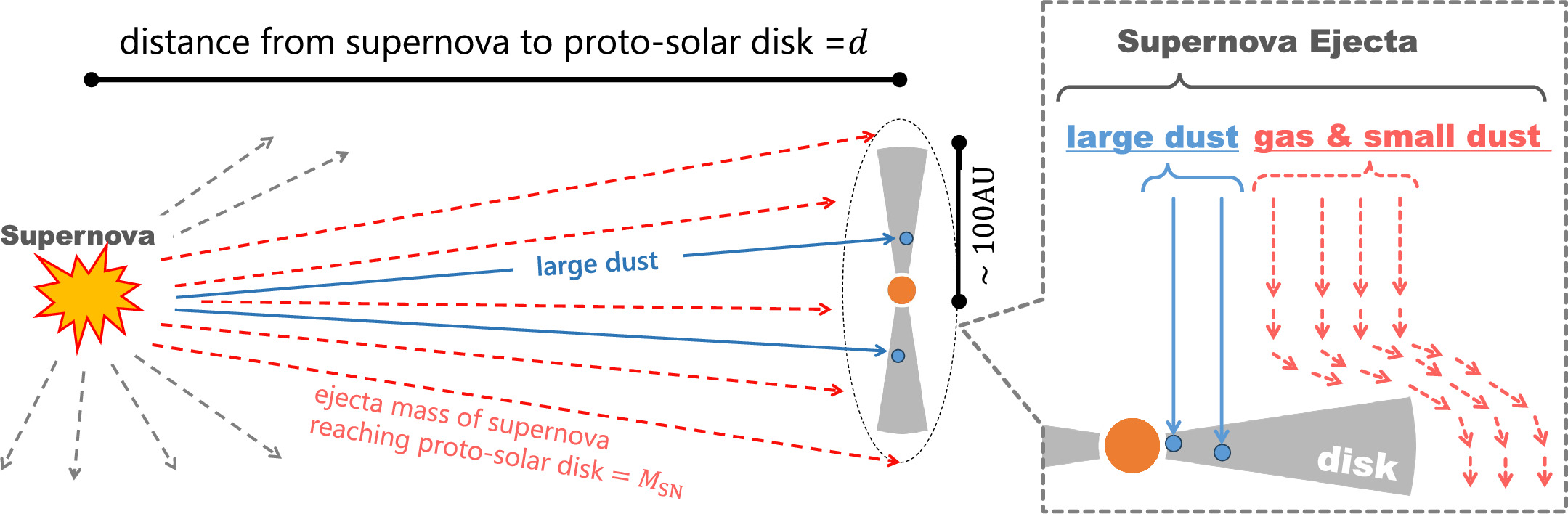
Figure 1. Schematic picture of SN dust containing 26Al being injected directly into an existing protosolar disk a few tenths of a parsec away.
Download figure:
Standard image High-resolution imageThe paper is organized as follows: Section 2 details the system setup and 26Al injection conditions. Section 3 examines the conditions for disk disruption by SN flows. Section 4 addresses disk structure and mass, determining the conditions for sufficient 26Al capture. Section 5 explores SN impacts on disk temperature and planet formation. Section 6 discusses the limitations of our study. Finally, Section 7 summarizes our findings.
2. Basic Picture
In this section, some definitions are summarized below to clarify our model. Figure 1 shows a schematic picture of this study, and Table 1 shows the definitions of the variables in our study. The three major assumptions in this study are: (1) SLRs are injected from a nearby SN only after the protosolar disk is formed; (2) all of the 26Al in the protosolar disk is supplied by a nearby SN; and (3) for simplicity, the protosolar disk is in face-on contact with the SN ejecta.
Table 1. Summary of Some Important Variables
| Name | [Unit] | Description | Typical Value |
|---|---|---|---|

| [M⊙] | Total ejecta mass of a nearby SN explosion | 10 |
| MSN | [M⊙] | Mass of the SN ejecta in contact with the protosolar disk (referred to as the “contact mass”), assuming an isotropic explosion from a distance of d |

|

| [M⊙] | Ejected masses of 26Al from SN | 1.3 × 10⁻⁴ |
| d | [pc] | Distance from the protosolar disk to the SN | 0.1 |
| ηd | [ − ] | Mass fraction of large dust (a > 1μ m) in SN ejecta | 0.20 |
| Mdisk | [M⊙] | Mass of the protosolar disk | ∼0.017 |
| R | [au] | Radius of the protosolar disk | ∼100 |
| Σdisk | [g cm−2] | Surface density of the protosolar disk | ∼1.7 |
| q | [ − ] | Radius dependence of the disk surface density (Equation (8)) | 1 − 3/2 |
| tdelay | [Myr] | Time delay from injection to formation of CAIs | ⋯ |
Note. The “typical value” is the value adopted in this study to estimate the value. And “[−]” denotes dimensionless variables. Those marked with “()” depend on other variables—see the text.
Download table as: ASCIITypeset image
As background for each assumption: (1) at least one SN, which would directly inject the SLRs into the early solar system, is expected to occur in the Sun’s birth cluster during the formation of the CAIs (e.g., Arakawa & Kokubo 2023); (2) since the timescale for disk formation is sufficiently long compared to the lifetime of 26Al, one would expect that all of the 26Al originally contained in the disk has decayed and can be neglected; and (3) the assumption of a face-on disk gives upper limits on both the disk disruption and injection efficiencies. In practice, the disk is likely to be inclined at an angle, but the face-on disk is the most injectable assumption (see Section 6.1 for more details). Moreover, as discussed in Wijnen et al. (2017), when the disk contacts the external outflow, the disk can be readjusted to be perpendicular to the flow. Therefore, the inclination angle will not change the overall conclusion.
We first discuss the amount of 26Al injected into the protosolar disk from a nearby SN. To avoid confusion, the mass of the SN ejecta in contact with the protosolar disk is called the “contact mass” MSN. The relation of this value to the total mass of the SN ejecta  is as follows:
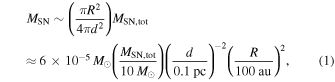
where d is the distance from the protosolar disk to the SN and R is the radius of the protosolar disk. The contact mass is composed of gas and dust, and we define the mass fraction of large dust (here defined as grains sufficiently large to be injected into the disk; typically >1 μm; Ouellette et al. 2010) as ηd. Assuming that the 26Al injection via gas and small dust grains is negligible, we can write the injected 26Al mass as
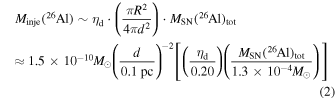
where  is the ejected mass of 26Al from the SN, with an adopted value of about ∼1.3 × 10⁻⁴
M⊙ per event (e.g., Timmes et al. 1995; Limongi & Chieffi 2006, 2018; Sukhbold et al. 2016; and see also Table 2). There are still many uncertainties regarding the nucleosynthesis of 26Al in SNe, and we have listed the theoretical 26Al yields of several different SN models in Table 2. Since the typical progenitor mass of recently observed SNe is M ≈ 8–17M⊙ (Smartt 2015), the typical value of ∼1.3 × 10⁻⁴
M⊙ used in this study is considered a sufficiently robust upper limit. Here, we have adopted the large dust mass fraction ηd ∼ 20% as the typical value (e.g., SN 1987A; Matsuura et al. 2011; and also see Section 6.2). Note that the timescale from the ejection of the SN to its injection into the disk is
is the ejected mass of 26Al from the SN, with an adopted value of about ∼1.3 × 10⁻⁴
M⊙ per event (e.g., Timmes et al. 1995; Limongi & Chieffi 2006, 2018; Sukhbold et al. 2016; and see also Table 2). There are still many uncertainties regarding the nucleosynthesis of 26Al in SNe, and we have listed the theoretical 26Al yields of several different SN models in Table 2. Since the typical progenitor mass of recently observed SNe is M ≈ 8–17M⊙ (Smartt 2015), the typical value of ∼1.3 × 10⁻⁴
M⊙ used in this study is considered a sufficiently robust upper limit. Here, we have adopted the large dust mass fraction ηd ∼ 20% as the typical value (e.g., SN 1987A; Matsuura et al. 2011; and also see Section 6.2). Note that the timescale from the ejection of the SN to its injection into the disk is  , so that the radioactive decay of 26Al during the travel is negligible.
Table 2. Summary of Theoretical 26Al Yields of Five Different SN Models
| Progenitor Mass | WW95 (1) | LC06 (2) | LC18 (3−1) | LC18 (3−2) | S16 (4) |
|---|---|---|---|---|---|
| Standard-mass Progenitor Models Supported by Recent Observations | |||||
| 11 | 1.7 × 10⁻⁵ | 1.6 × 10⁻⁵ | ⋯ | ⋯ | 1.1 × 10⁻⁵ |
| 12 | 2.0 × 10⁻⁵ | 2.1 × 10⁻⁵ | ⋯ | ⋯ | 1.2 × 10⁻⁵ |
| 13 | 2.8 × 10⁻⁵ | 2.4 × 10⁻⁵ | 1.9 × 10⁻⁵ | 4.4 × 10⁻⁵ | 1.7 × 10⁻⁵ |
| 15 | 4.3 × 10⁻⁵ | 1.3 × 10⁻⁴ | 3.8 × 10⁻⁵ | 6.9 × 10⁻⁵ | 3.2 × 10⁻⁵ |
| High-mass Progenitor Models with Many Observational Uncertainties | |||||
| 20 | 3.5 × 10⁻⁵ | 5.4 × 10⁻⁵ | 6.3 × 10⁻⁵ | 5.4 × 10⁻⁵ | † 1.6 × 10⁻⁷ |
| 25 | 1.3 × 10⁻⁴ | 8.6 × 10⁻⁵ | 7.6 × 10⁻⁵ | 1.3 × 10⁻⁴ | † 1.9 × 10⁻⁶ |
| 30 | 2.7 × 10⁻⁴ | 9.9 × 10⁻⁵ | 3.7 × 10⁻⁶ | 2.1 × 10⁻⁵ | † 8.6 × 10⁻⁶ |
| 35 | 3.5 × 10⁻⁴ | 8.4 × 10⁻⁵ | ⋯ | ⋯ | † 2.3 × 10⁻⁵ |
| 40 | 3.6 × 10⁻⁴ | 1.2 × 10⁻⁴ | 1.2 × 10⁻⁵ | 3.9 × 10⁻⁵ | † 3.4 × 10⁻⁵ |
Notes. All values in the table are in M⊙. (1) Woosley & Weaver (1995); (2) Limongi & Chieffi (2006); (3–1 and 3–2) Limongi & Chieffi (2018); and (4) Sukhbold et al. (2016). All models assume a nonrotating progenitor model with solar metallicity, except for the rotating star model (v = 300 km s−1) in (3–2). The SN model in (4) considers the possibility of explosion, and the nucleosynthesis calculation is self-consistent with it, so there are cases of explosion failure, in which case the dagger symbol “(†)” is added to the table. The other models in (1)–(3) are based on artificial explosions, regardless of the explodability.
Download table as: ASCIITypeset image
Next, from meteorite measurements, we know the short-lived nuclide/stable isotope abundance ratios at the time of CAI formation as Nr/Ns=26Al/27Al ≈ 5.23 × 10⁻⁵ (e.g., Jacobsen et al. 2008), which are extrapolated to the time of formation of the CAIs. Using this ratio and the mass fraction of 27Al in the solar abundance X⊙(27Al) ≈ 5 × 10⁻⁵ (Asplund et al. 2009), the total amount of undecayed 26Al in the protosolar disk Mdisk(26Al) can also be written as
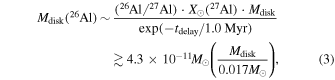
where the exponential function in the equation is the correction factor between the actual injected mass and the observed mass due to the time delay tdelay from injection to CAI formation. In this study, we have chosen a value of tdelay = 0. Although this term is not insignificant, it represents the minimum amount that should be introduced to give robust conditions. Here, to satisfy Mdisk(26Al) = Minje(26Al), we obtain the following conditions for the distance of the SN:
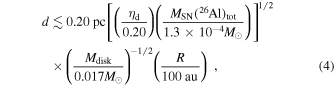
where the disk radius R only determines the solid angle at which 26Al can be received from the SN, once 100 au is adopted. Similarly, the disk mass Mdisk here normalizes the total amount of 26Al required, and we adopt 0.017M⊙.
The injectable distance obtained from Equation (4) is the same as the distance obtained by matching the parameter ηd with previous studies: Ouellette et al. (2005) assumed a disk radius of R = 30 au, an injection rate of 100%, and chose an SN that can eject more 26Al than a typical SN (the 40M⊙ progenitor model for Woosley & Weaver 1995, assuming ∼3.6 × 10⁻⁴ M⊙ yields), deriving the distance d ≈ 0.3 pc. Also, Ouellette et al. (2007) suggested that 26Al is insufficient at d = 0.1 pc for the 4% injection rate suggested from hydrodynamical simulations. These estimates are consistent with our result obtained from Equation (4), while we note that gas and dust are not distinguished in these estimates, and thus the correspondence to ηd values in our model has no physical meaning regarding the actual ηd value.
3. Pressure Stability Condition
3.1. Basic Picture of Disk Disruption
Next, we discuss the stability of the protosolar disk due to dynamical pressure, as shown in Figure 2. Since it is straightforward to speculate whether the ram pressure of the dense SN ejecta  can destroy the protosolar disk, it has been investigated analytically/numerically in many previous studies (e.g., Chevalier 2000; Ouellette et al. 2007; Close & Pittard 2017). Our conclusion that the disk can survive the SN at distances
  is the same as in previous studies. The pressure stability condition derived below is almost identical to that in Chevalier (2000), but here we briefly review the condition for the completeness of the discussion.
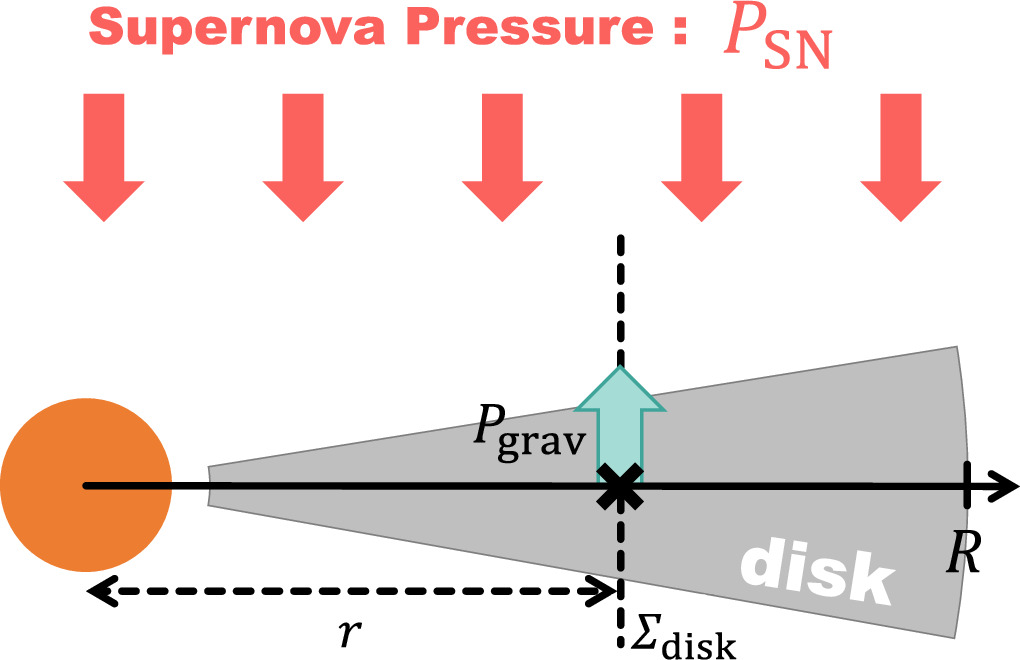
Figure 2. Schematic picture considering whether the disk disruption is caused by ram pressure from an SN flow.
Download figure:
Standard image High-resolution imageWe consider the disk to be disrupted if the ram pressure of the SN flows Psn exceeds the gravitational force per unit area, Pgrav, which keeps the disk bound to the central pre-main-sequence star. An estimate of the gravitational force per unit area is
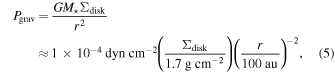
where M⋆ is the mass of the central star and is adopted as M⋆ = 1M⊙, r is the distance of the radial direction from the center, and Σdisk is the surface density at r. Here, typical values of the disk surface density Σdisk and radius r were adopted once from the minimum-mass solar nebula model. For a more detailed discussion, the values are redefined in Section 3.2.
Next, we calculate the ram pressure that the disk receives from the freely expanding SN ejecta. For simplicity, we use the thin-shell approximation for the ejecta (e.g., Laumbach & Probstein 1969; Koo & McKee 1990). In this scenario, we consider an isotropic ejecta, which forms a hot bubble, and the pressure of this bubble is given by
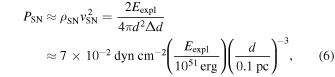
where Eexpl is the explosion energy of the SN. Δd is the thickness of the shell, which is Δd/d = 1/12 in the case of the thin shell for an ideal gas (Laumbach & Probstein 1969).
Here, the stability criterion  for the disk region outside the radius r is given by

The disk disruption distance obtained from Equation (7) is the same as the distance obtained from the disk surface density and radius in previous studies: Chevalier (2000) assumed a disk radius of R = 1015 cm ≈ 66 au and a uniform density distribution Σdisk = Mdisk/(π R2) ≈ 6.4 g cm−2, and also used a uniform density for the SN (Δd → d), so its gravitational force is Pgrav ≈ 10−3 dyn cm−2 and the stable criterion becomes d ≳ 0.25 pc.
3.2. Formulation with Disk Structure Assumption
Here, based on the minimum-mass solar nebula model (e.g., Hayashi 1981; Armitage 2010), we adopt the following disk model for a broad range of disk masses and structures:

where q is the radius dependence of the disk surface density, 1 < q ≤ 3/2. For instance, q = 3/2 in the minimum-mass solar nebula model (Hayashi 1981), while q = 1 in a viscous accretion disk model with a constant turbulent alpha parameter (Armitage 2010). In this case, the radius R of the protosolar disk in Section 2 is then defined as

and we can rewrite the disk radius R as

For q = 1, R ≈ 81 au is obtained from Equation (10). Also, when q = 3/2, R ≈ 55 au is obtained.
Then the stability criterion of Equation (7) can be rewritten as

4. Conditions Where Consistent Distances Exist
Here, a simple comparison of the 26Al injection distance (Equation (4)) and the disk disruption distance (Equation (11)) shows that the answer is not clear and is a very complicated problem to discuss. Therefore, we here treat this as a more realistic problem by investigating whether a sufficient 26Al injection can be achieved while allowing some disk disruption. In this section, we describe how to solve this.
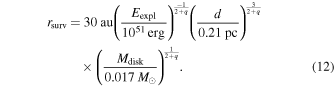
To solve this problem, we first define the two radii, assuming the distance from the SN to the disk: by rewriting Equation (11) with the disk radius as a function of distance, we obtain the outermost radius rsurv of the disk that remains unbroken at a given distance d from the SN (we refer to this as the “surviving radius”):
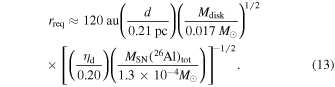
Also, by rewriting Equation (4) with the disk radius as a function of distance, we also obtain the radius rreq required to receive a sufficient amount of 26Al for a given distance d from the SN (we call this the “required radius for 26Al”):
Then, there are three conditions that must hold for the different radii, given by Equations (10), (12), and (13), as follows:
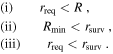
These mean the following: (i) the disk radius that gives the necessary solid angle for sufficient 26Al injection must be smaller than the radius R estimated from the disk mass in Equation (10); (ii) the disk radius that survives the disruption by the SN flow should remain at least the size of the Neptune formation radius  ; and (iii) the surviving disk radius rsurv is more than the required disk radius rreq that can intercept a sufficient amount of 26Al.
4.1. Achievement Conditions Assuming SN Model
First, given the 26Al yield in the current SN model, we investigate whether the disk injection scenario can be achieved. In this case, solving condition (iii) (i.e., rreq < rsurv) gives the achievable distance from the SN to the disk. For q ≠ 1, condition (iii) is satisfied in the following:
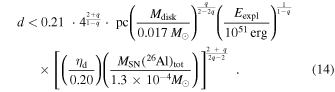
Figure 3 shows the achievable distance conditions by substituting the 26Al yield of Table 2 into Equation (14). Also shown in the figure is the distance conditions for the disk radius to remain above 30 au, obtained from Equation (11). It is shown that for all current SN models, their injectable conditions lead to mostly destruction with only less than 30 au disk remaining. From this, we conclude that even if partial disk disruption is allowed, almost all SN explosion models cannot reproduce the hypothesis of direct 26Al injection into an already formed protosolar disk.
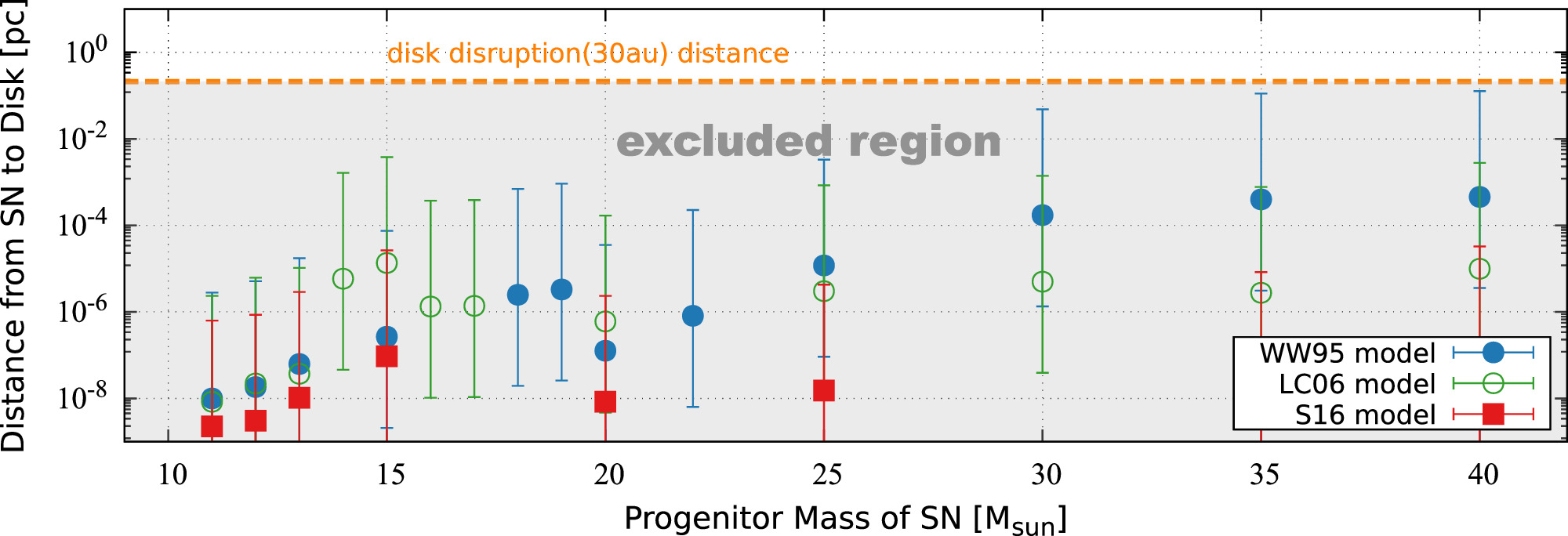
Figure 3. Summary of results for the distance required for 26Al injection for each SN model and disk disruption condition. Results are shown assuming disk mass Mdisk = 0.017M⊙ and surface density structure Σdisk ∝ r−3/2. The orange dotted line indicates the nearest distance where the disk radius remains undisrupted up to r = 30 au. The points indicate the distance at which a sufficient amount of 26Al can be injected into the surviving disk while allowing partial disk disruption in the case that the 26Al yield for each SN model is adopted (with the large dust mass fraction ηd = 20%). Error bars correspond to cases where the large dust mass fraction is from 5% to 100%. For all SN models with progenitor masses of 11–40M⊙, we show that the disk radius can be disrupted to less than 30 au if a sufficient amount of injection is achieved.
Download figure:
Standard image High-resolution image4.2. More General Achievement Conditions
Now, more generally, let us seek what conditions are required for sufficient 26Al injection to be achieved while allowing partial disk disruption. We can obtain the minimum 26Al yield required to satisfy all the conditions when the equations relating the distance and the 26Al yield obtained from each of the conditions (i) through (iii) are coupled. Figure 4 shows the solution conditions obtained from the coupled equations.
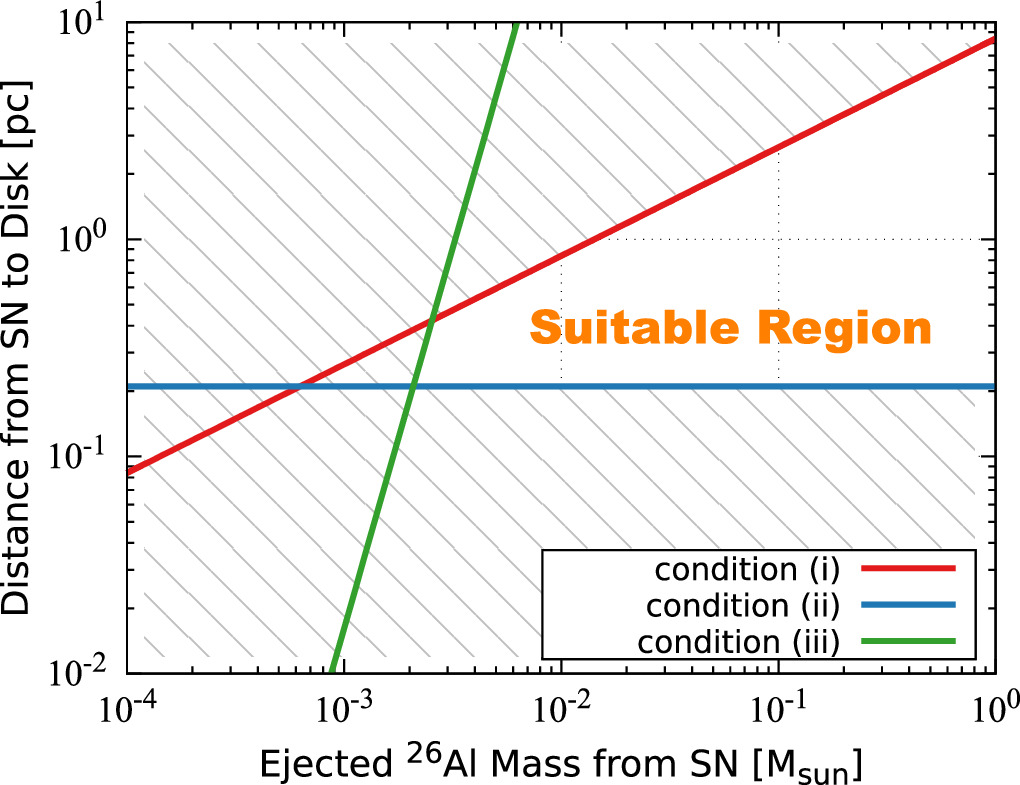
Figure 4. Conditions (i) through (iii) are illustrated on the plane of distance d and 26Al yield. Each solid line corresponds to a different condition, in the case of the disk mass Mdisk = 0.017M⊙, surface density structure Σdisk ∝ r−3/2, and large dust mass fraction ηd = 20%.
Download figure:
Standard image High-resolution imageThe first two conditions (i) and (ii) are satisfied as follows:
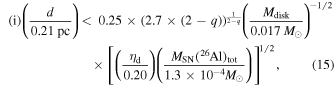
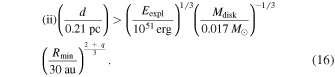
We can confirm that there exists a suitable distance d, independent of q (in the range 1 ≦ q ≦ 3/2), such that the above two conditions are satisfied. For q ≠ 1, condition (iii) is satisfied in the following:
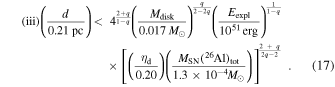
For there to exist a distance d from the SN such that all three conditions hold, it is necessary that
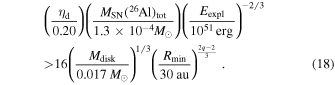
Because the disk needs to be sufficiently massive to form the solar system, it is practically difficult to consider a smaller value for the disk mass here. We can read Equation (18) as a requirement for the mass of 26Al contained in the large dust ejected from the SN.
The solution is different for the q = 1 case, but agrees with the extrapolated value. We attach below a solution for q = 1 as an example. By rewriting Equation (11) with the disk radius as a function of distance, we obtain the surviving radius rsurv as

The required radius rreq for 26Al is the same with Equation (13). In the q = 1 case, only the condition (iii) for the SN is given as
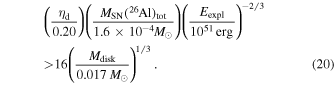
The result is a continuous solution with q ≠ 1.
In summary, conditions (i), (ii), and (iii) are satisfied and the disk injection scenario is realized as

As can be seen from Table 2, there is no SN model that can achieve such a value, even with a large estimate of the dust fraction ηd. We can also see that this value is not achievable even within the yield diversity that comes from stellar evolutionary processes (see Figure 5 in Brinkman et al. 2023 and Brinkman et al. 2019, 2021). The uncertainty of the nuclear reaction rate also has the potential to increase the 26Al yield, but it seems to be difficult to do so, as currently suggested by Woosley & Heger (2007) and Tur et al. (2010).
5. Temperature Conditions for Disk
In this section, we discuss the impact on planet formation if an SN explosion satisfies the conditions we found in Section 4.
We consider the case where the shock from an SN is thermalized when it contacts the disk. We assume that the kinetic energy of the SN is thermalized throughout the disk. Here, the energy flux produced in the shock-heated region can be written approximately as follows:
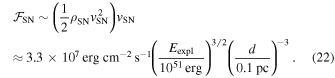
Given that the shock-heated layer (Figure 5) is thin, the radiation from the layer is thought to be released as upward and downward radiation fluxes. Additionally, we assume a balance between the downward irradiation flux (heating) and the thermal radiation from the disk (cooling). The following equations are satisfied:


where blackbody radiation is assumed as the cooling term for the disk. From Equations (22), (23), and (24), the thermal equilibrium temperature of the disk is given as follows:

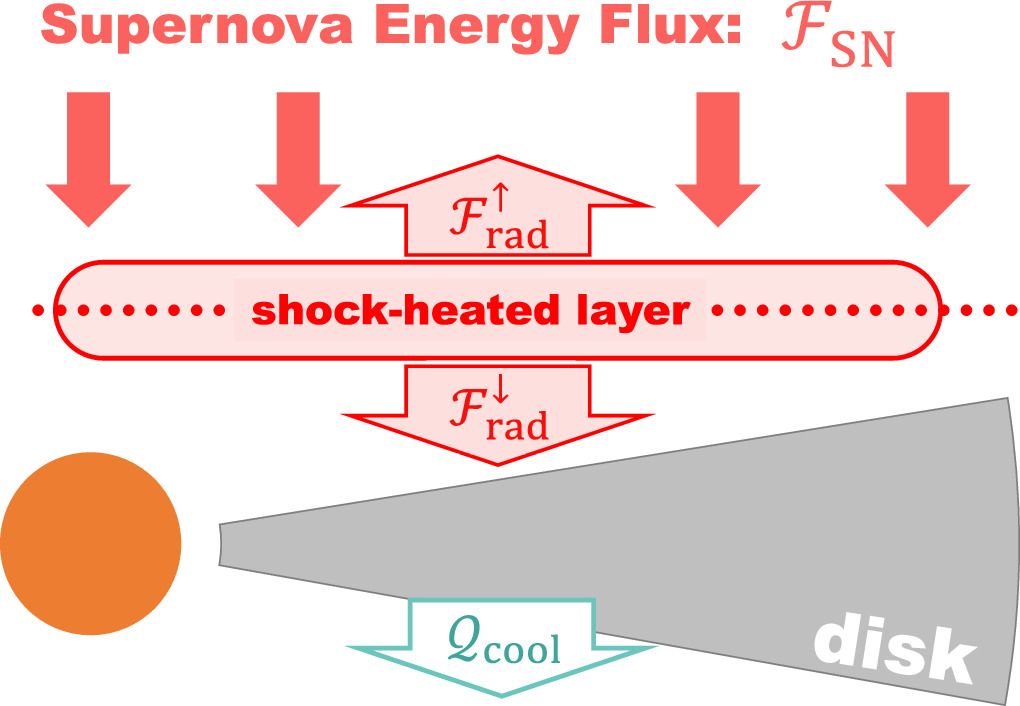
Figure 5. Schematic picture of an SN flow being thermalized at the top of the disk, resulting in the heating of the disk.
Download figure:
Standard image High-resolution imageFinally, we estimate the disk temperature by considering an SN explosion as a suitable source of 26Al. When substituting Equation (4) into Equation (25), we can obtain
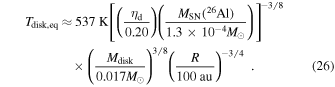
The internal energy due to this temperature is well below the gravitational bound energy (eth < egrav = GM⋆/R), so the disk does not thermally evaporate. However, we find that this disk temperature is an eye-catching value for the evolution of the protosolar disk, and its impact on planet formation cannot be ignored. Therefore, we next discuss in Section 6.3 the effect of the temperature we found on planet formation.
6. Discussion
6.1. Effect of Inclination Angle
As in Section 2, this study assumes that the flow from an SN hits the face-on disk. However, in reality, the disk can be inclined at an angle.
In terms of the injection efficiency, the inclination reduces the contact solid angle, so that Equation (2) is rewritten as

where θ is the angle between the disk axis and the direction from the solar system to the SN. Therefore, the resulting distance required for injection is
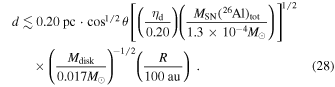
On the other hand, in terms of the disk disruption efficiency, the SN flow that the disk receives per unit area is smaller by  , as in the injection case. That is, the stability criterion yields
  , and Equation (11) can be rewritten as
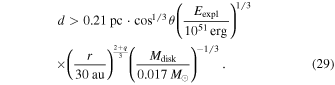
The conditions required for injection in Equation (28) become more strict with  , whereas the conditions for avoiding disk disruption in Equation (29) are relaxed with
  . A simple comparison reveals that a larger inclination angle makes SN disk injection more difficult. In other words, the assumption of a face-on disk gives the most conservative condition for the injection scenario. This supports the overall conclusion that the disk injection scenario is unlikely to work.
6.2. Observational Constraints on Large Dust Masses of SNe
Dust formation in SN ejecta, identifiable by infrared (IR) excess, has been confirmed in SN 1987A (Matsuura et al. 2011; Wesson et al. 2015). Considering that SN flows take decades to reach protosolar disks, SN 1987A, about 40 yr after the explosion, serves as an excellent case to study dust formation in SNe relevant to our research.
Matsuura et al. (2011) observed far-IR and submillimeter emission from SN 1987A. The shapes of the spectral energy distributions (SEDs) were consistent with continuous dust emission, indicating the presence of 0.4–0.7M⊙ of dust. This was further supported by extrapolating the synchrotron flux measured at shorter wavelengths up to 8014 days after the explosion to far-IR wavelengths, which showed an order-of-magnitude lower emission than observed, indicating dominant dust emission. Given the total metal mass of SN 1987A of ∼3M⊙, a dust fraction ηd ∼ 20% seems reasonable.
Further research by Wesson et al. (2015) over 24 yr, starting 615 days after the explosion, found 0.6–0.8M⊙ of dust, consisting of grains larger than ≳2μ m, exists in SN 1987A, suggesting that most of the small dust was formed early and grew through accretion and aggregation. These results underscore the importance of considering SNe at appropriate post-explosion timescales for understanding dust formation rates relevant to solar system formation.
More recently, mid-IR imaging of SN 1980K over 40 yr after explosion by Zsíros et al. (2023) reported its dust mass Md ≈ 0.02M⊙. However, the SED analysis indicates a much greater amount of dust (∼0.24–0.58M⊙), suggesting a dust mass fraction of ηd ≲ 0.20.
To summarize, for an SN within the timescale of our study, a dust mass fraction ηd of up to 0.20 seems realistic. This assumes spherical symmetry and nonextreme conditions, but higher ηd values are possible in clumpy structures. To understand further details, comprehensive studies are needed, including simulations of multidimensional SN explosions with dust formation and observations of dust emission in SNe several decades after the explosion.
6.3. Effect of Disk Temperature on Planet Formation
The heating of a protoplanetary disk due to a nearby SN (Section 5) may cause sublimation and/or melting of the materials in the disk and, consequently, influence planet formation. Moreover, such heating may not be consistent with the early solar system record, as we explain below.
Organic matter on dust grains in the protosolar disk can be irreversibly lost due to heating. While an amorphous carbon component survives at temperatures up to ∼1000 K, organic materials start to be removed due to pyrolysis and evaporation at ≃250–400 K (Gail & Trieloff 2017). The loss of organic mantles significantly reduces the stickiness of dust grains and thus may limit rocky planet(esimal) formation (Homma et al. 2019). Although the origins of organic matter in carbonaceous chondrites and in returned samples of primitive asteroids in the solar system are poorly understood, some organic matter is considered to trace back to the interstellar medium (Glavin et al. 2018). Thus, the presence of these pristine materials may put a limit on the heating of the early solar system due to SN exposure.
The sublimation of highly volatile ices (here defined as materials whose sublimation temperature is lower than water ice) may impose a much lower limit on the temperature experienced during SN heating. For instance, the major volatile molecules H2O and CO sublimate at ≃150 K and ≃20 K, respectively (Okuzumi et al. 2016). Sublimation is a reversible process, and thus recondensation after the cooling of the disk may recover its original state. However, sublimation and recondensation may turn pristine amorphous ice into crystalline ice; this may not be consistent with the properties of cometary ice, which is widely thought to be amorphous (e.g., Rubin et al. 2020; Prialnik & Jewitt 2022). Moreover, isotopic compositions of highly volatile elements in the comet 67P/Churyumov–Gerasimenko measured with the Rosetta spacecraft suggest that cometary ice has never sublimated and been mixed with the inner solar system materials (Marty et al. 2017; Rubin et al. 2020). Thus, depending on the recondensation processes and the efficiency of the mixing in the protosolar disk, heating due to a nearby SN may be constrained or ruled out.
Last, we note that heating to a much higher temperature (≳1300 K) leads to the sublimation and/or melting of silicates. Such high-temperature heating events formed silicate grains, including CAIs and chondrules, from their precursor aggregates in our solar system (e.g., Krot et al. 2009), which likely changed their stickiness and aerodynamic properties and influenced planet formation. For instance, the efficient accretion of chondrules onto large planetesimals is proposed to have assisted the forming of planetary embryos (Johansen et al. 2015).
To summarize, SN heating may cause irreversible changes in protoplanetary disk materials and thus influence planet formation processes. The heating of the protosolar disk associated with the implantation of 26Al from an SN (Section 5) would have caused the sublimation of highly volatile ices and, possibly, the processing of organic matter, which may contradict the solar system record. Thus, we suggest that future studies need to perform a more detailed analysis of the heating and cooling processes of disks during SN exposure and the physicochemical impacts on the disk materials.
6.4. Implications for Exoplanetary Systems
Provided that injection into protoplanetary disks is a major source of SLRs in planetary systems, our results indicate that systems like our solar system, whose planet(esimal) formation and evolution are highly influenced by the radioactive decay energy of 26Al, may be rare. As shown in Section 4, a parameter space that results in the injection of 26Al comparable to the amount found in the solar system, without disrupting the disk, is fairly limited. In other words, a typical outcome of SN exposure is either a limited injection of 26Al or the disruption of the protoplanetary disk, which implies that existing exoplanetary systems are formed without a significant (solar-system-like) amount of 26Al. It is not fully understood and beyond the scope of this study how the deficit of 26Al in the protoplanetary disk changes the architecture of the resulting planetary systems, but a proposed outcome (Lichtenberg et al. 2019a) is a limited loss of water from planetesimals due to an insufficient 26Al heat budget and the dominant formation of water-rich planets. Thus, our study ultimately suggests that Earth-like, water-poor planets may be minor in our universe.
7. Summary
In this paper, we have assumed that 26Al from an SN is injected into an already formed protosolar disk and investigated whether there are conditions under which the surviving disk radius can capture enough 26Al for planet formation, while allowing for some disk disruption. We consider a diversity of disk masses and its structures, 26Al yields of SN, and large dust mass fractions. In our model, given the disk mass and its structure, the disk radius that can accept 26Al is obtained without any other assumptions. We also obtain the position at which the disk is disrupted by ram pressure, depending on the distance from the SN to the disk. Under each of these being determined self-consistently, we conclude that, as shown in Equations (18) and (21), an ejecta mass of 26Al is required as follows:

This value is difficult to reproduce, given the diversity of the ejected 26Al mass and large dust mass fractions from the SN, which are shown in Figure 3.
Furthermore, we find that even if the above conditions are achieved, the SN shock changes the disk temperature. And this temperature change is not negligible in the context of planetary formation.
Our finding places a strong constraint on the “disk injection scenario”—a scenario in which fresh 26Al of the early solar system is injected from an SN into an already formed protosolar disk is quite challenging. We rather suggest that the fresh 26Al of the early solar system should have been synthesized/injected in other ways.
Acknowledgments
We thank T. Suzuki, S. Inutsuka, K. Maeda, S. Arakawa, and E. Kokubo for fruitful discussions. This work has been supported by Japan Society for the Promotion of Science (JSPS) KAKENHI grants (18H05437, 20H00174, 20H01904, 20KK0080, 21H04514, 21K13964, 21K13976, 21K13983, 22KJ0528, 22H01290, 22H04571, and 22H05150).
Footnotes
- 4